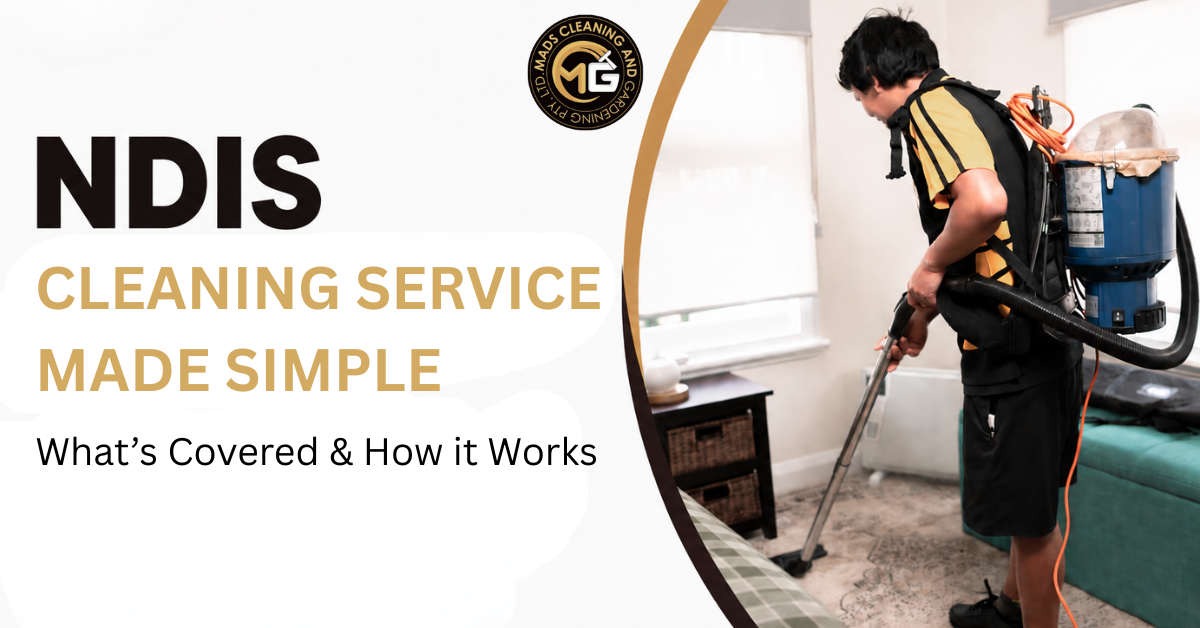
NDIS cleaning refers to household cleaning and domestic assistance services funded through the National Disability Insurance Scheme (NDIS) for participants whose disability affects their ability to maintain a safe and clean home. These services help people with disability manage essential household tasks they cannot perform independently or safely due to physical limitations, fatigue, pain, cognitive challenges, or sensory sensitivities.
For many participants, keeping a home clean is not simply a matter of motivation; it is a genuine functional barrier. NDIS cleaning services bridge that gap, supporting participants to live in a comfortable, safe, and functional home environment.
Eligible NDIS cleaning services may be funded through the Core Supports budget under the Assistance with Daily Life category, subject to individual plan approval.
Does the NDIS Cover Cleaning Services?
Yes, the NDIS can fund cleaning services, but approval is not automatic. The NDIS applies a “reasonable and necessary” test to all supports, meaning any funded service must be directly related to a participant’s disability, represent value for money, and support their goals.
To have cleaning services included, participants must demonstrate that their disability affects their capacity to perform household tasks. This is best supported by evidence from an occupational therapist, treating specialist, or GP. Participants who can independently manage cleaning are unlikely to have these services approved.
Cleaning support should be raised during the planning meeting, with relevant evidence prepared in advance. Approval depends on individual circumstances, functional capacity, and the goals outlined in the plan.
What Cleaning Services Are Covered Under the NDIS?
NDIS cleaning services are designed to help participants maintain a safe and functional home environment. The exact tasks covered depend on individual needs and the supports approved in a participant’s plan. Below are the common household cleaning tasks typically covered under NDIS domestic support services.
General House Cleaning
Routine cleaning of living areas, bedrooms, hallways, and shared spaces falls under general domestic cleaning. Keeping the home organised, tidy, and hygienic on a regular basis is directly linked to participant wellbeing and the ability to live independently.
Vacuuming and Mopping Floors
Vacuuming carpets and rugs, sweeping, and mopping hard floors removes dust, dirt, and debris while reducing slip and trip hazards. This is particularly important for participants with mobility challenges or those at higher risk of falls.
Dusting Furniture and Surfaces
Dusting shelves, furniture, window sills, and countertops removes allergens, cobwebs, and built-up grime. For participants with respiratory conditions or sensitivities, regular dusting is a genuine health requirement rather than simply a comfort measure.
Bathroom and Toilet Cleaning
Cleaning and sanitising toilets, sinks, showers, mirrors, and bathroom fixtures is a core component of NDIS domestic assistance. Bathrooms are high-touch, high-risk areas for hygiene, and maintaining them properly is essential for participant health and safety.
Kitchen Cleaning
Kitchen cleaning support covers wiping benches and splashbacks, cleaning sinks, wiping external appliance surfaces, emptying bins, and maintaining food preparation areas. A hygienic kitchen is fundamental to health, and regular support in this area is often a high priority for participants with physical limitations or fatigue.
Laundry Assistance
NDIS laundry assistance includes washing and drying clothes, folding and organising laundry, and ironing essential garments where required. Managing clothing and linen independently is a meaningful component of daily living and personal presentation.
Changing Bed Linen
Changing and replacing bedding, making the bed, and managing basic linen care are included under household assistance. Clean bedding supports healthy sleep and general comfort, both of which contribute to participant wellbeing.
Maintaining a Safe and Hygienic Living Environment
Taken together, regular NDIS cleaning reduces infection risk, removes hazards that could cause falls or accidents, limits allergen exposure, and supports the kind of ordered environment that helps participants manage daily life with greater confidence and independence.
What Is Not Usually Covered by NDIS Cleaning Services?
There are clear boundaries to what NDIS cleaning funds. Services not typically covered include:
- End-of-lease cleaning: End-of-Lease cleaning is considered a general housing obligation rather than a disability-related need.
- Renovation or construction clean-ups: These fall outside the scope of NDIS domestic assistance.
- General household expenses: Cleaning products and equipment are not covered unless specifically arranged in a plan.
- Tasks unrelated to disability: If a participant could manage the task independently without their disability, it is unlikely to be funded.
- Home maintenance: Repairs, gardening, and lawn mowing are categorised separately and are not covered under the cleaning support line.
All funded supports must directly relate to the participant’s disability and the goals in their plan.
Who Is Eligible for NDIS Cleaning Support?
Eligibility for NDIS cleaning support is determined during the planning process and depends on individual circumstances. Key factors include:
- Disability-related challenges with cleaning tasks: The participant must demonstrate that their disability directly limits their ability to manage household cleaning independently and safely.
- Functional capacity: An occupational therapist assessment is central to establishing need and documenting how the disability affects daily functioning.
- Supporting evidence: Medical reports, OT assessments, and specialist letters that document the functional impact of the participant’s disability will strengthen the case for cleaning support.
- Planning meeting preparation: Participants should clearly raise household support needs during NDIS planning meetings. Failing to do so can result in supports not being included in the plan, even when they would otherwise be eligible.
Which NDIS Funding Category Pays for Cleaning Services?
NDIS cleaning services are funded through the Core Supports budget, specifically under the Assistance with Daily Life category. This category covers supports that help participants with daily activities, including domestic tasks such as cleaning, laundry, and household maintenance.
Core Supports funding is among the most flexible in the NDIS framework. Participants can generally direct funds within this category toward the supports that best meet their needs, including adjusting how often cleaning services are provided or what specific tasks are prioritised.
Participants who are unsure how their funds are allocated should review their plan with their support coordinator or plan manager to confirm what cleaning-related supports are approved and how they can be accessed.
How Often Can You Receive NDIS Cleaning Services?
The frequency of NDIS cleaning services depends entirely on the individual participant’s needs, the supports approved in their plan, and the size and complexity of their household. Common arrangements include weekly, fortnightly, or customised schedules tailored to specific circumstances.
Factors that influence how often services are provided include:
- The nature and severity of the participant’s disability
- Whether the participant has a carer at home who provides some support
- The size of the household and the number of rooms requiring cleaning
- Health and safety considerations that may require more frequent hygiene maintenance
- Goals related to independence and daily living are outlined in the plan
Participants who require more frequent support due to health conditions or complex needs should discuss this clearly during planning and ensure supporting evidence reflects the frequency required.
Self-Managed vs Plan-Managed vs Agency-Managed: How Cleaning Services Work
How a participant manages their NDIS funds directly affects how they access and pay for cleaning services.
Self-managed participants
They have the greatest flexibility, engaging any provider, including unregistered ones and paying invoices directly from NDIS funds. This offers more choice but requires the participant to handle their own administration.
Plan-managed participants
Participants work through a plan manager who handles invoicing and payments on their behalf. They can also access both registered and unregistered providers.
Agency-managed (NDIA-managed) participants
Here, participants must use NDIS-registered providers, with the NDIA paying providers directly. This involves less administration but fewer provider options.
Confirm with any prospective provider that they can work within your specific management arrangement before engaging their services.
How to Choose the Right NDIS Cleaning Provider
Choosing the right NDIS cleaning provider is one of the most important decisions a participant can make. Key factors to consider include:
- Experience with NDIS participants: A provider who regularly works with NDIS clients will understand the specific needs, communication requirements, and sensitivities involved in delivering support in a participant’s home.
- Reliability and communication: Consistent scheduling, timely attendance, and clear communication about any changes are essential for participants who depend on regular support.
- Insurance and background checks: All cleaners should hold appropriate insurance and have undergone police checks. This protects participants and their property.
- Flexible service options: Look for providers who can tailor their services to your specific plan and adjust as your needs change over time.
- Transparent pricing: Providers should clearly outline their rates in line with the NDIS Price Guide and provide a written service agreement before work begins.
- Participant-centred approach: The best providers treat participants with dignity and respect, adapt to individual preferences, and prioritise the participant’s comfort and goals above all else.
Benefits of Professional NDIS Cleaning Services
Access to professional NDIS cleaning services delivers benefits that go well beyond a tidy home.
- Improved health and hygiene: Reduce infection risk and allergen exposure, particularly important for participants with respiratory conditions or compromised immune systems.
- A safer living environment: Results from regular removal of clutter, trip hazards, and slippery surfaces, lowering the risk of falls and accidents.
- Greater independence: Comes from having the support needed to maintain a home without relying on family members for every household task.
- Reduced stress: For both participants and carers, removing a significant source of anxiety and cognitive load from daily life.
- Better quality of life: Overall, supporting positive mental health, better sleep, and a greater sense of dignity and control.
- Support for daily routines: Allow participants to focus their energy on the activities and goals that matter most.
Why Choose Mads Cleaning for NDIS Cleaning Services?
Mads Cleaning is a trusted local provider of NDIS cleaning services in Hobart, with extensive experience supporting NDIS participants across a range of needs and plan types. Our team of trained, insured, and thoroughly vetted cleaning professionals understands the unique requirements of working in participants’ homes, and we are committed to delivering respectful, reliable, and genuinely person-centred support.
We work with self-managed, plan-managed, and agency-managed participants, offering personalised cleaning plans that reflect your specific NDIS goals and household requirements. Scheduling is flexible, our pricing aligns with the NDIS Price Guide, and we take pride in building long-term relationships with the participants we support.
If you are looking for professional NDIS cleaners in Hobart who will treat your home and your goals with care, contact Mads Cleaning today for a tailored consultation.
FAQs
Can I use my NDIS funding for cleaning services?
Yes, provided cleaning support is included in your NDIS plan under the Core Supports budget. You will need to demonstrate that your disability affects your ability to manage household cleaning and raise this need during your planning meeting with supporting evidence.
How often can NDIS cleaning services be used?
Frequency depends on your individual needs, and the approved plan supports. Weekly and fortnightly arrangements are most common, though customised schedules are available based on your functional capacity and household circumstances.
Does NDIS cleaning support include supplies and equipment?
Generally, NDIS cleaning funding covers the service itself rather than products or equipment. Some providers bring their own supplies; confirm this with your provider before services begin.
How do I know if I qualify for cleaning support?
If your disability directly limits your ability to perform household cleaning safely or independently, you are likely to qualify. An occupational therapist assessment is the most effective way to establish and document this need.
Can I choose my own cleaning provider?
Yes. Self-managed and plan-managed participants can choose any provider. Agency-managed participants must use NDIS-registered providers. In all cases, choosing a provider with specific NDIS experience is strongly recommended.
What should I look for in an NDIS cleaning provider?
Prioritise experience with NDIS participants, reliable scheduling, transparent pricing aligned with the NDIS Price Guide, appropriate insurance and police checks, and a respectful, participant-centred approach. A written service agreement should be provided before work begins.