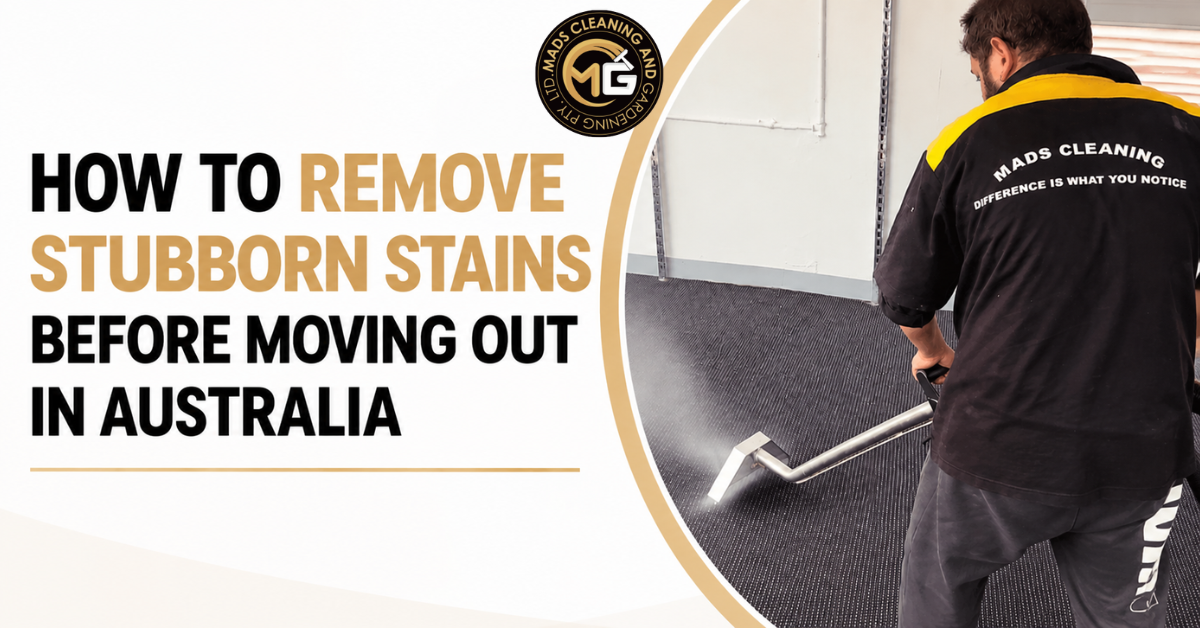
Wondering how to remove stubborn stains before moving out in Australia? MADS Cleaning helps remove marks, spills and built-up grime from your rental before the final inspection.
Small stains can become more noticeable once furniture and belongings are removed, especially on walls, carpets, kitchen surfaces and bathrooms. Before the final clean, identify stubborn stains separately from ordinary dirt and grime, and avoid aggressive DIY methods that could damage the original surface.
The overall process includes:
- Identify the stain and surface
- Test the cleaning method first
- Use the gentlest suitable product
- Treat walls, carpets, floors, kitchen and bathroom stains
- Avoid excessive scrubbing and moisture
- Rinse and dry where appropriate
- Check the property against the entry condition report
- Consider fair wear and tear and applicable tenancy rules
- Take dated photos after cleaning
- Get professional help for stains that do not respond to DIY cleaning
If you’re looking for a reliable cleaning company in Hobart to handle the final clean, MADS Cleaning can help with a thorough move-out service, helping you prepare the property without overworking or damaging its surfaces.
What Should You Check for Stains Before Moving Out?
Before starting your final clean, inspect each area of the property for visible stains, marks and built-up grime. Adding these checks to your rental house cleaning checklist can help you identify problem areas before the final inspection.
Walls and Painted Surfaces
Check painted walls for everyday marks that can become noticeable once the property is empty:
- Scuff marks: Look for shoe, furniture and moving-related marks around walls and doorways.
- Blu Tack residue: Check where posters, decorations or hooks have been attached.
- Crayon: Inspect walls, particularly around children’s rooms and play areas.
- Grease marks: Look for oily patches around kitchens and frequently touched areas.
- Sticky tape residue: Check for leftover adhesive from tape, hooks or decorations.
- Fingerprints and general grime: Pay attention to high-touch areas around switches, doors and hallways.
Carpets, Rugs and Upholstery
Check soft furnishings and flooring for stains that may have accumulated during the tenancy:
- Coffee: Look for spills around living rooms, bedrooms and work areas.
- Red wine: Check carpet and upholstery around dining and entertaining areas.
- Food and gravy: Inspect areas around dining tables and where food has been consumed.
- Pet stains and odours: Check areas regularly used by pets for visible marks and lingering smells.
- Mud and grass: Look near entrances and other areas exposed to outdoor footwear.
- Oil-based stains: Check for greasy marks from food, cosmetics or other oily substances.
Kitchens and Bathrooms
These areas often develop stubborn stains and buildup that require extra attention:
- Grease: Check cooktops, splashbacks, rangehoods, walls and nearby surfaces.
- Food splashes: Look around ovens, cooktops, splashbacks and kitchen walls.
- Soap scum: Inspect showers, baths, screens and other frequently wet surfaces.
- Hard-water marks: Look for mineral deposits on shower glass, taps and tiles.
- Grout discolouration: Check grout lines for darkening, staining or built-up dirt.
- Mould staining: Inspect damp areas, particularly around shower corners, grout and silicone sealant.
Floors and Outdoor Areas
Inspect flooring and external areas for marks that may need specific cleaning:
- Scuff marks: Check for marks caused by furniture, shoes and moving boxes.
- Water marks: Look for rings, streaks or discolouration caused by spills or moisture.
- Oil spills: Inspect garage floors, driveways and other areas where vehicles or equipment are kept.
- Rust: Check metal areas, outdoor surfaces and floors for rust stains.
- Dirt and built-up grime: Look at corners, edges, garages and outdoor areas where dirt can accumulate.
When working through your rental house cleaning checklist, don’t forget less obvious areas such as corners, skirting boards, behind appliances, window tracks, garages and outdoor spaces. Checking these areas before you begin helps you spot stubborn stains early and focus your cleaning efforts where they are needed most.
How to Remove Stubborn Stains From Walls and Painted Surfaces
Before treating rental wall stains, always test your cleaning method on a small, inconspicuous area first. Painted walls can have different finishes, and the wrong product or technique may remove paint or leave a noticeable patch.
Start with General Grime
For everyday dirt and grime on a painted wall:
- Dust the wall: Remove loose dust and dirt before using any liquid.
- Use a soft cloth or sponge: Choose a non-abrasive material to protect the paint.
- Start with mild soapy water: Use a small amount of mild detergent diluted in water.
- Avoid excessive moisture: Do not soak the wall, as moisture can affect paint and plaster.
- Dry the surface afterwards: Wipe away remaining moisture with a clean, dry cloth.
Remove Scuffs and Tougher Marks
For common wall scuffs, start with gentle cleaning rather than abrasive products:
- Shoe marks: Gently wipe the affected area with a damp soft cloth.
- Furniture scuffs: Use mild soapy water and light pressure to loosen the mark.
- Fingerprints: Wipe gently with a slightly damp cloth, particularly around doors and switches.
- General dirt: Work gradually with mild soapy water rather than scrubbing aggressively.
Be careful with abrasive cleaning pads and “magic eraser” products. Excessive pressure can remove paint, create shiny patches or alter the finish, potentially making the wall look worse than the original mark.
Remove Blu Tack, Adhesive and Sticky Residue
For Blu Tack grease stains, adhesive and sticky residue, gently lift or roll the material away from the surface rather than scraping it. Sharp tools can scratch the paint or remove the coating. If residue remains, test a suitable cleaning product on an inconspicuous area before treating the visible section.
Remove Crayon and Grease Marks
Crayon and grease marks may need a different approach depending on the type and finish of the paint. Start with the mildest suitable cleaning method and test it first. For washable surfaces, a diluted cleaning solution or suitable sugar soap may help with stubborn grease, but always follow the product instructions and avoid excessive scrubbing.
If a mark does not respond to gentle cleaning, stop before repeatedly applying stronger products. This can help prevent permanent damage to the painted wall while preparing the property for your final inspection.
How to Remove Carpet and Rug Stains Before Moving Out
Carpets and rugs deserve particular attention during a move-out clean because the wrong stain-removal technique can spread the stain, damage carpet fibres or leave visible water rings. Before treating a stain, identify what caused it and choose a method suitable for the carpet material.
The Basic Carpet Stain-Removal Method
Follow these steps when treating common carpet stains:
- Identify the Stain: Determine what caused the mark so you can choose the appropriate treatment.
- Blot rather than rub: Gently blot the area to lift the stain without pushing it deeper into the fibres.
- Remove solids carefully: Use a spoon or blunt edge to lift dried food and other solids without damaging the carpet.
- Apply a suitable cleaning solution: Use a carpet-safe product appropriate for the type of stain.
- Blot again: Work from the outside towards the centre to avoid spreading the stain.
- Rinse carefully if appropriate: Remove cleaning residue without over-wetting the carpet.
- Allow the carpet to dry completely: Ensure the area is thoroughly dry before walking over it or replacing furniture.
- Vacuum once dry: Vacuum the treated area to restore the carpet’s appearance and remove loosened particles.
Common Carpet Stains To Treat
Before your final inspection, check carpets and rugs for common stains such as:
- Coffee: Treat spills promptly and follow a dedicated coffee stains removal method for the best approach.
- Red wine: Blot fresh spills quickly and avoid rubbing, which can spread the colour.
- Gravy and food: Remove solid residue first, then treat the remaining mark with a suitable carpet cleaner.
- Oil: Use a product designed for greasy or oil-based stains rather than soaking the carpet.
- Fruit: Remove pulp or solids carefully before treating the remaining coloured stain.
- Grass: Gently lift loose dirt and use a suitable carpet-safe treatment.
- Pet-related stains: Address both the visible mark and odour, particularly where accidents have soaked into the carpet.
Fresh spills are generally easier to treat than old or dried stains. A dried stain may have bonded more deeply with the fibres and could require a different cleaning approach. Some stubborn or deeply embedded stains may not be completely removable with DIY methods and may require professional carpet treatment.
If repeated cleaning is not improving the stain, avoid aggressive scrubbing, as this can damage the fibres or leave a noticeable patch before your rental inspection.
How to Remove Kitchen Grease and Food Stains
The kitchen is one of the areas most likely to develop baked-on grease, food splashes and built-up grime during a tenancy. A thorough house move clean should focus on both visible surfaces and areas that are often overlooked.
Grease Stains on Walls and Splashbacks
For grease marks around the kitchen:
- Start with a mild degreasing solution: Choose a product suitable for the wall or splashback material.
- Allow it time to work: Give the solution a short time to loosen built-up grease.
- Wipe rather than aggressively scrub: Use a soft cloth or sponge to avoid damaging the surface.
- Rinse and dry where appropriate: Remove residue and leave the area clean and dry.
Oven and Cooktop Grime
Before cleaning your oven and cooktop:
- Remove loose debris first: Clear away food particles, crumbs and loose grease.
- Use an appropriate oven cleaner: Follow the manufacturer’s recommended cleaning method and product instructions.
- Clean the overlooked areas: Check racks, trays, oven glass, cooktop surfaces and surrounding areas for built-up grime.
If you’re dealing with heavy baked-on grease or want to avoid the hassle of DIY cleaning, consider professional oven cleaning as part of your move-out preparation.
Cabinets and Countertops
Kitchen cabinets and benchtops can collect grease around edges and frequently touched areas. Make sure you:
- Clean doors and handles: Remove fingerprints, grease and food residue.
- Wipe edges and corners: These areas can collect hidden grime over time.
- Check underneath appliances: Look for food particles, grease and spills.
- Clean around splashbacks: Remove food splashes and grease from surrounding surfaces.
If you are short on time or dealing with heavy grease and built-up grime, a professional move-out cleaning service can make the final kitchen clean much easier. MADS Cleaning can take care of detailed areas such as ovens, cooktops, cabinets and splashbacks, helping you get your kitchen ready for handover as part of a complete house move clean.
How to Remove Bathroom Stains Before a Vacate Clean
Before vacating your home, give the bathroom extra attention, as soap residue, mineral buildup, grout stains and mould can become more noticeable during the final inspection. Use a cleaning method that suits each surface and avoid harsh products that could cause damage.
Shower Glass and Hard-Water Marks
Hard-water marks are caused by mineral deposits left behind as water evaporates. A suitable acidic cleaner can help break down this buildup, but always follow the product instructions and check that it is safe for the glass and surrounding surfaces before use.
Tile and Grout Stains
For stained tiles and grout:
- Remove surface dirt first: Clear away loose dirt and grime before treating the stain.
- Use an appropriate grout cleaner: Choose a product suitable for the tile and grout material.
- Work with a small brush: Gently work the cleaner into the grout without excessive scrubbing.
- Rinse thoroughly: Remove cleaning residue and allow the area to dry properly.
Mould Stains and Silicone Sealant
Mould staining around silicone sealant may not always disappear with regular cleaning. If the mould has penetrated the sealant or the silicone is damaged, cleaning alone may not be enough and replacement may be required. Avoid attempting repairs that could make the condition worse without checking what is permitted under your tenancy agreement.
Safety note: Never mix cleaning chemicals, particularly bleach with acidic or ammonia-containing products. Always follow the product’s safety instructions and ensure the area is adequately ventilated.
How to Deal With Stains on Timber, Laminate and Vinyl Floors
Timber, laminate and vinyl floors need different cleaning methods, so always identify the flooring material before treating a stain. During a move-out clean, check for common marks such as:
- Scuff marks: Gently wipe shoe and furniture marks using a suitable floor cleaner.
- Water marks: Clean moisture spots promptly and avoid leaving excess water on the floor.
- Food spills: Remove food residue quickly before it dries or becomes sticky.
- Sticky residue: Use a surface-safe method to loosen adhesive or other sticky marks without scratching the finish.
- Dark marks: Check whether the mark is surface dirt or deeper discolouration before attempting stronger treatment.
Avoid excessive water, harsh abrasives and inappropriate solvents, as these can damage protective coatings, cause swelling or permanently discolour timber, laminate and vinyl flooring. Always follow the flooring manufacturer’s cleaning recommendations where available.
When a Stain Is Actually Floor Damage
Not every mark can be removed through cleaning. Before treating a stubborn area, determine whether you are dealing with:
- A removable surface stain: Dirt, food or residue sitting on the floor that can be cleaned away.
- Scratches: Physical damage to the surface or protective coating that cleaning cannot repair.
- Discolouration: A change in the floor’s colour that may indicate damage to the finish or material.
- Swelling: Raised or uneven areas, often associated with moisture affecting the flooring.
- Water damage: Damage that may extend beneath the visible surface and require more than cleaning.
If a mark does not improve with gentle cleaning, avoid repeatedly scrubbing it. Professional cleaning can help determine whether the issue is a removable stain or existing floor damage before your final inspection.
Can Old or Dried Stains Still Be Removed?
Yes, old or dried stains can still be removed in many cases, but the result depends on the type of stain, the surface and how it has been treated previously. Some stains may need professional cleaning if household methods are not effective.
Can a Stain be Removed After a Long Time?
It depends on several factors:
- What caused the stain: Food, grease, wine, rust and other substances react differently to cleaning.
- How long it has been present: Older stains may have penetrated deeper into the material.
- The material: Carpet, paint, timber, laminate and vinyl all require different treatments.
- Whether heat was previously applied: Heat can sometimes set certain stains, making them harder to remove.
- Whether previous cleaning products were used: Earlier treatments can affect how the stain responds to further cleaning.
What Gets Extremely Stubborn Stains Out?
There is no universal stain remover that works on every surface. The right treatment depends on both the stain type and the material. Always start with the gentlest suitable method, test it in an inconspicuous area and follow the product instructions.
For particularly stubborn stains, professional cleaning may provide a safer option than repeatedly experimenting with different household products.
Should You Keep Scrubbing a Stain That Won’t Come Out?
No. If repeated cleaning is not working, stop scrubbing. Continued pressure can damage paint, carpet fibres, flooring or protective finishes, potentially leaving a bigger problem than the original stain.
If DIY cleaning has not worked, professional house cleaners move out clean services may be a better option. Avoiding common end-of-lease cleaning mistakes can also help prevent unnecessary damage and missed areas before the final inspection. MADS Cleaning can assess stubborn areas and use appropriate cleaning methods as part of a thorough move-out clean, helping you prepare the property without unnecessarily damaging its surfaces.
DIY Stain Removal Solutions: What Actually Works?
Some common household products can help with specific stains, but they are not suitable for every surface. The safest approach is to identify the stain, check the surface and test any solution on an inconspicuous area first.
| DIY solution | What it may help with | Important consideration |
| Baking soda paste | Light marks, residue and some odours | Can be mildly abrasive, so test first and avoid vigorous scrubbing. |
| Dish soap | Grease and some food-based stains | Dilute appropriately and check that it is suitable for the surface. |
| Hydrogen peroxide | Some organic stains | May bleach or discolour certain carpets, fabrics and finishes. |
| Vinegar | Some mineral deposits and household cleaning tasks | Can damage certain stone, wood and other surfaces. |
Baking Soda Paste
A paste made with baking soda and water may help with certain surface marks and odours. However, it can be mildly abrasive, so always test it first and avoid using excessive pressure.
Dish Soap
Diluted dish soap can be useful for some grease and food-based stains. Use a small amount, avoid over-wetting the area and check that the surface is compatible before applying it.
Hydrogen Peroxide
Hydrogen peroxide can be effective on some organic stains, particularly on suitable fabrics and surfaces. However, it may bleach or discolour certain materials, so testing in an inconspicuous area is essential.
Vinegar
Vinegar can help with some mineral deposits and general household cleaning tasks, but it is not a universal stain remover. It can damage certain natural stone, timber, finishes and other surfaces, so check the manufacturer’s recommendations first.
Key takeaway: Never mix cleaning chemicals, and always check the surface and manufacturer’s instructions before applying any product.
Move-Out Cleaning Tips to Protect Your Rental Bond
A thorough move-out clean can help you leave the property in good condition, but cleaning is only one part of preparing for handover. Before the final inspection, take a few practical steps to protect your records and understand your responsibilities as a renter.
- Compare the property with the entry condition report: Use the original report to check the property’s condition when you moved in.
- Take dated photographs after cleaning: Photograph clean rooms, surfaces and any areas that may be relevant to your bond.
- Don’t assume every mark needs to be removed: A rental property does not necessarily need to be restored to a brand-new condition.
- Understand fair wear and tear versus damage: Normal deterioration from everyday use is different from damage caused during the tenancy.
- Avoid risky repairs: Do not attempt DIY repairs or stain treatments that could make the condition worse.
- Keep cleaning receipts and invoices: Retain records if you use professional cleaning services, particularly where cleaning requirements are disputed.
- Check your state or territory’s tenancy authority: If there is a bond dispute, refer to the relevant official tenancy body for guidance.
Can a Landlord Claim Your Bond for Carpet or Wall Stains?
A landlord may be able to make a bond claim in some circumstances, but a stain does not automatically mean that a tenant is responsible for the cost of replacement or repair. The circumstances, condition of the property at the start of the tenancy, nature of the mark, fair wear and tear, and applicable state or territory tenancy laws can all be relevant.
For accurate guidance, check the tenancy authority that applies to your property. Depending on where you live, this may include NSW Fair Trading, Consumer Affairs Victoria, Queensland’s Residential Tenancies Authority or the relevant authority in another state or territory.
If you are unsure about a potential bond claim, rely on the applicable tenancy rules and your entry condition report rather than trying to remove every mark with increasingly aggressive cleaning methods.
Final Exit Clean Stain Removal Checklist
Use this checklist for a final walk-through before handing back your rental property:
☐ Walls free from removable scuffs and marks
☐ Blu Tack and adhesive residue removed where safe
☐ Carpet stains treated
☐ Floors cleaned and checked for marks
☐ Kitchen grease removed
☐ Oven and cooktop cleaned
☐ Cabinets and drawers wiped
☐ Bathroom tiles and grout cleaned
☐ Shower glass free from visible buildup
☐ Windows and tracks cleaned
☐ Skirting boards dusted
☐ Rubbish and belongings removed
☐ Outdoor and garage areas checked
☐ Property photographed after cleaning
☐ Entry condition report reviewed
How MADS Cleaning Helps With Moving Out Cleaning
Moving out can be stressful when you are trying to pack, organise the handover and complete a detailed clean at the same time. Professional cleaning services for moving out can take care of the time-consuming areas and help prepare your rental for the final inspection.
Professional help can be particularly useful when:
- The property is large.
- You have limited time before handover.
- Carpets have multiple stubborn stains.
- Oven and kitchen grease has heavily built up.
- Bathrooms need intensive cleaning.
- Previous DIY cleaning attempts have not worked.
- You are concerned about missing areas before the final inspection.
MADS Cleaning provides detailed move-out cleaning designed to cover the areas commonly checked during a final inspection, from kitchens and bathrooms to floors, surfaces and other overlooked areas. Instead of spending hours trying different DIY stain-removal methods, you can have experienced cleaners handle the cleaning systematically.
Choosing the best move-out cleaning service for your situation can also give you more time to focus on packing and moving while ensuring the property receives the attention it needs before handover.
For a more detailed clean before leaving your rental, explore our end-of-lease cleaning service to see how MADS Cleaning can help prepare your property for handover. Ready to book your clean? Contact MADS Cleaning today for a free quote.
Frequently Asked Questions About Removing Stains Before Moving Out
Can vinegar remove stains?
Vinegar can help with some mineral deposits and general cleaning tasks, but it is not suitable for every stain or surface. It can damage materials such as some natural stone, timber and certain finishes, so always check the surface and test it first.
Can landlords claim a bond for carpet stains in Australia?
A bond claim depends on the circumstances and the tenancy laws in the relevant Australian state or territory. Factors such as the property’s original condition, the nature of the stain, fair wear and tear, and whether the stain constitutes damage may be considered. Check your relevant state or territory tenancy authority for specific guidance.
When should I hire professional move-out cleaners?
Consider professional cleaners when you have limited time, the property requires extensive cleaning, there are multiple stubborn stains, or previous DIY attempts have not worked. Professional move-out cleaners can also help when you are concerned about missing areas before the final inspection or meeting specific cleaning expectations.
Conclusion: Leave the Property Clean, Not Overworked
Removing stubborn stains before moving out does not mean scrubbing every surface until it looks brand new. A careful, systematic approach can help you prepare the property while avoiding unnecessary damage.
Remember to:
- Treat stains according to the surface and stain type: What works on carpet may not be suitable for painted walls, timber, laminate or vinyl.
- Avoid increasingly aggressive DIY methods: If a stain will not come out, continued scrubbing or stronger chemicals could cause permanent damage.
- Complete a systematic move-out clean and document the property: Check the entry condition report, clean the key areas and take dated photographs before handover.
If you are short on time or dealing with stubborn stains and built-up grime, MADS Cleaning can help take the pressure off your final clean.