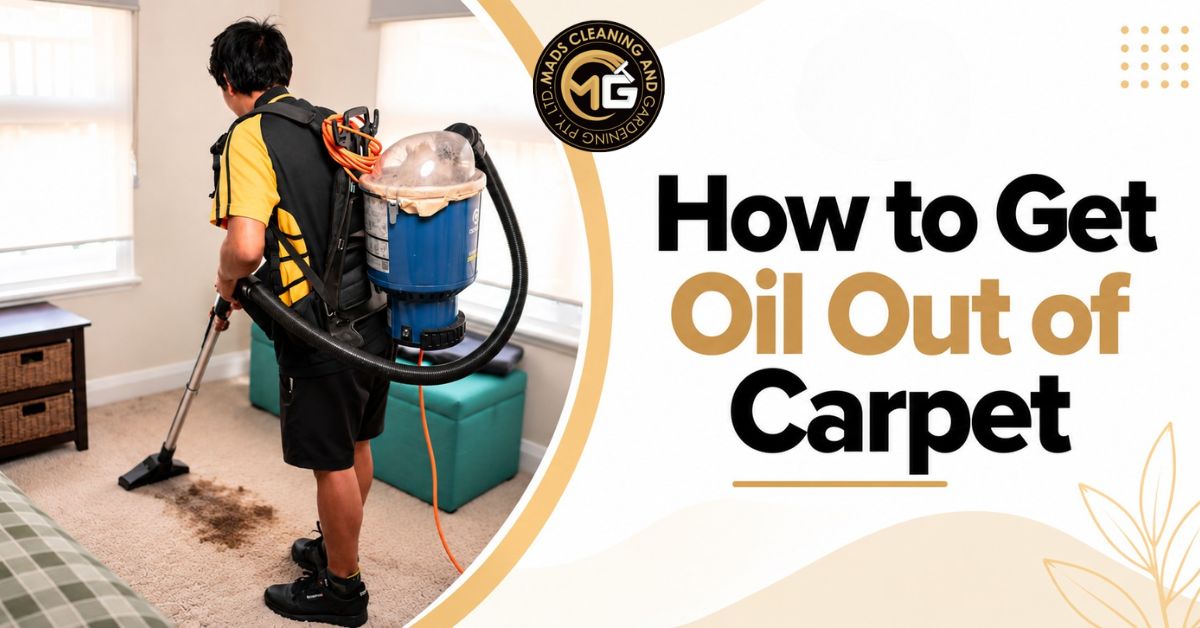
Oil stains are among the tougher carpet stains to remove, and there is a reason for that; oil, being a non-water-soluble stain, will spread further into the carpet fibres if water is the first choice of stain remover. Cooking oil, olive oil, butter, grease, beauty oils, motor or engine oil are all frequent offenders, and can cause carpet to appear spotty, dark or oily if not properly treated.
Spilled cooking oil, butter or greasy food on the carpet? The age-old question of how to get oil out of carpets still haunts many Australian homeowners to this day. You may be tempted to wash it down, but water and oil do not mix and can further damage the carpet instead.
So, how do you get oil out of carpet? The sooner you deal with grease, the easier your chances of removing it. First, start by gently blotting up as much oil as you can. Use paper towels or a clean, dry cloth and press gently. Then use an absorbent powder to draw out the remaining liquid and treat the grease with a mild cleaning solution.
Fresh spills are easier to tackle than dried-up oil stains, so move quickly. Before using any cleaning products, ensure it does not affect your carpet. Check the carpet manufacturer’s instructions and test the solution on a small area first.
Below, MADS Cleaning has planned out the steps to how you can get oil out of carpet:
- Blot Up the Oil as Soon as Possible
- Apply an Absorbent Powder
- Prepare a Mild Degreasing Solution
- Treat the Remaining Oil Stain
- Rinse Away the Cleaning Solution
- Dry the Carpet Thoroughly
- Check the Stain and Repeat if Necessary
What Do You Need to Get Oil Out of Carpet?
To get oil out of carpet, you’ll need the following products:
- Paper towels or clean white cloths
- Clean microfibre cloths
- Baking soda (bicarbonate of soda)
- Cornflour (cornstarch)
- Vacuum cleaner
- Mild, clear dishwashing liquid
- Warm water
- Small bowl or bucket
- Soft-bristle brush or old toothbrush
- Dry towels
- Carpet-safe stain remover, if required
- Gloves
- Carpet manufacturer’s care instructions, where available
Not all of these products will be needed for all stains and it’s tempting to use several of them simultaneously. Don’t use all of these for all stains and don’t feel compelled to use several at once. This will depend on the type of oil and carpet fibre involved and it is always a good idea to test any new cleaning products on an inconspicuous area of carpet first.
How to Get Oil Out of Carpet
Getting oil out of carpet starts with removing as much of the grease as possible before it spreads or sinks deeper into the fibres. Start by gently blotting the fresh oil, then use an absorbent powder to draw out more of the grease. After that, carefully treat the remaining mark with a mild dishwashing solution, rinse away the residue and let the carpet dry completely.
Here is exactly how to do it, step by step.
1. Blot Up the Oil as Soon as Possible
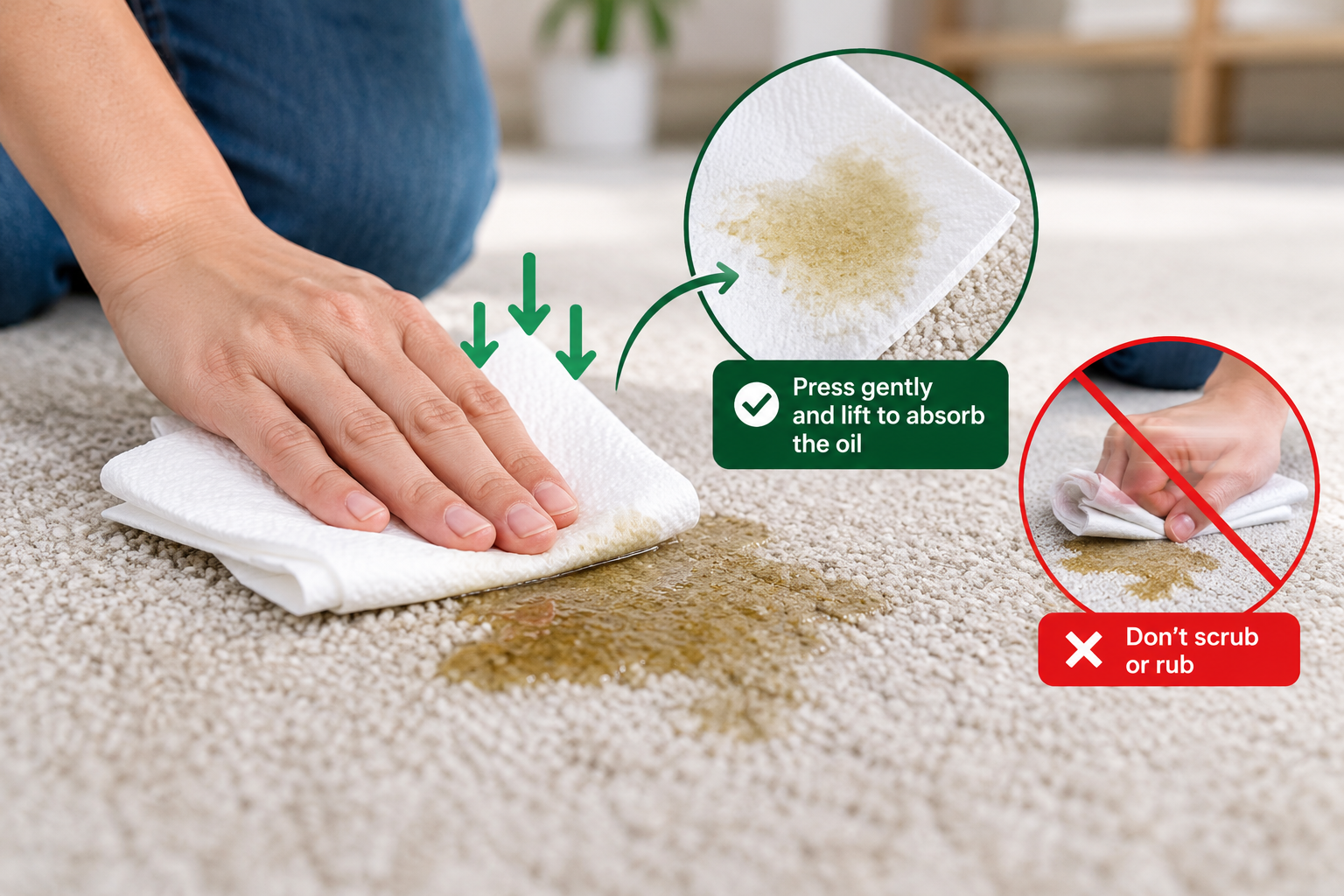
As soon as you notice the spill, grab a few paper towels or a clean, dry cloth and place them directly over the oily patch. Press straight down gently, then lift the towel away and check how much oil it has absorbed.
Move to a clean section of the towel or use a fresh one whenever it becomes oily. Keep pressing and lifting until very little oil transfers onto the towel.
Try to imagine lifting the oil straight up from the carpet rather than pushing it around. Avoid rubbing the stain from side to side, as this can spread the oil across nearby carpet fibres and force it deeper into the carpet.
2. Cover the Area with an Absorbent Powder
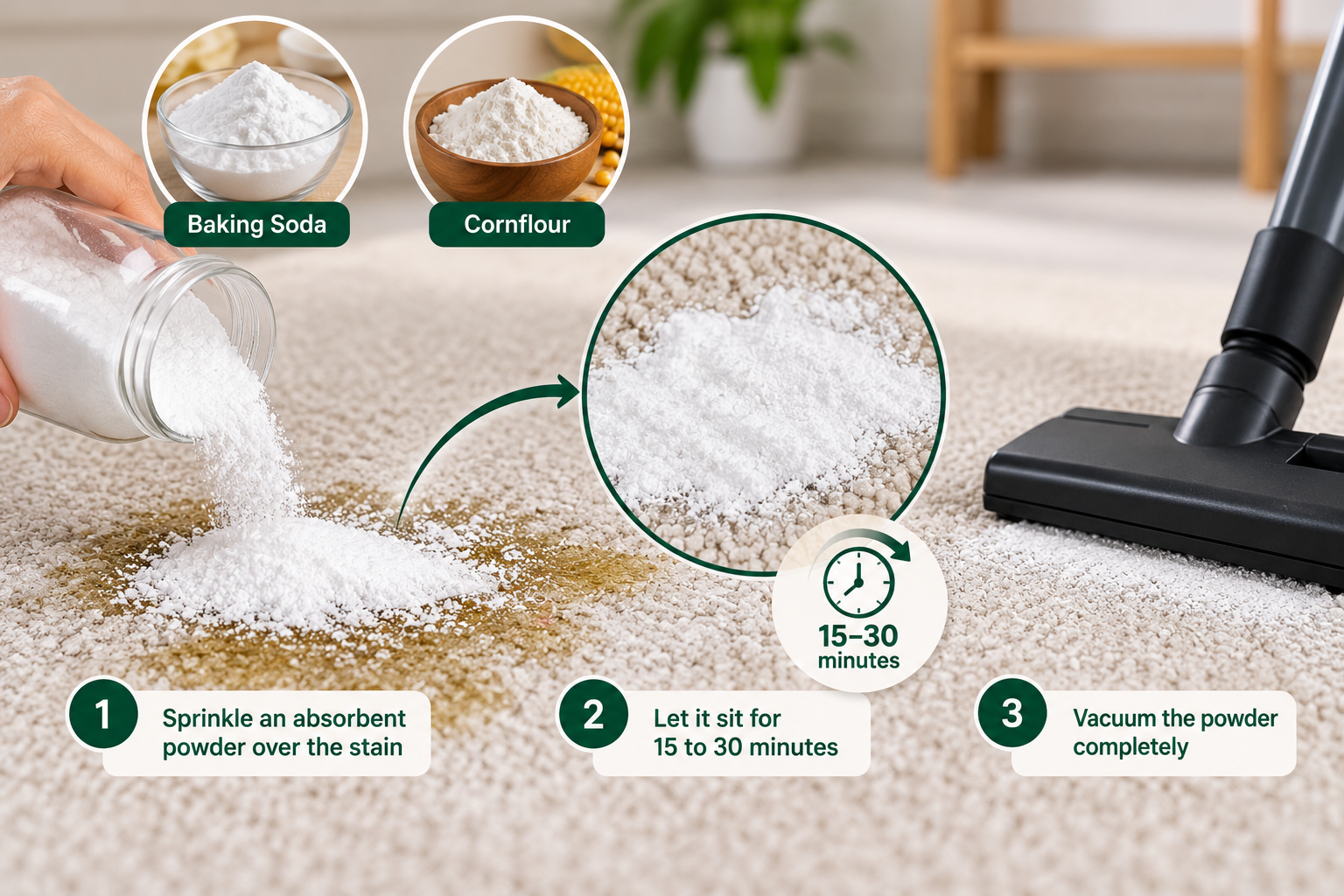
Once you have blotted away the excess oil, reach for baking soda or cornflour. Sprinkle enough powder over the affected area to create an even layer that completely covers the oily patch.
Leave the powder sitting on the carpet for around 15 to 30 minutes for a fresh or light stain. If the stain is larger or heavily saturated with oil, give the powder more time to absorb the grease.
When you are ready, slowly vacuum over the powder until it is completely removed. Run the vacuum over the area again if the carpet still feels greasy when you lightly touch or step near it.
The powder can pull out some of the remaining oil, but a visible mark may still be left behind. That is where the next step comes in.
3. Prepare a Mild Degreasing Solution
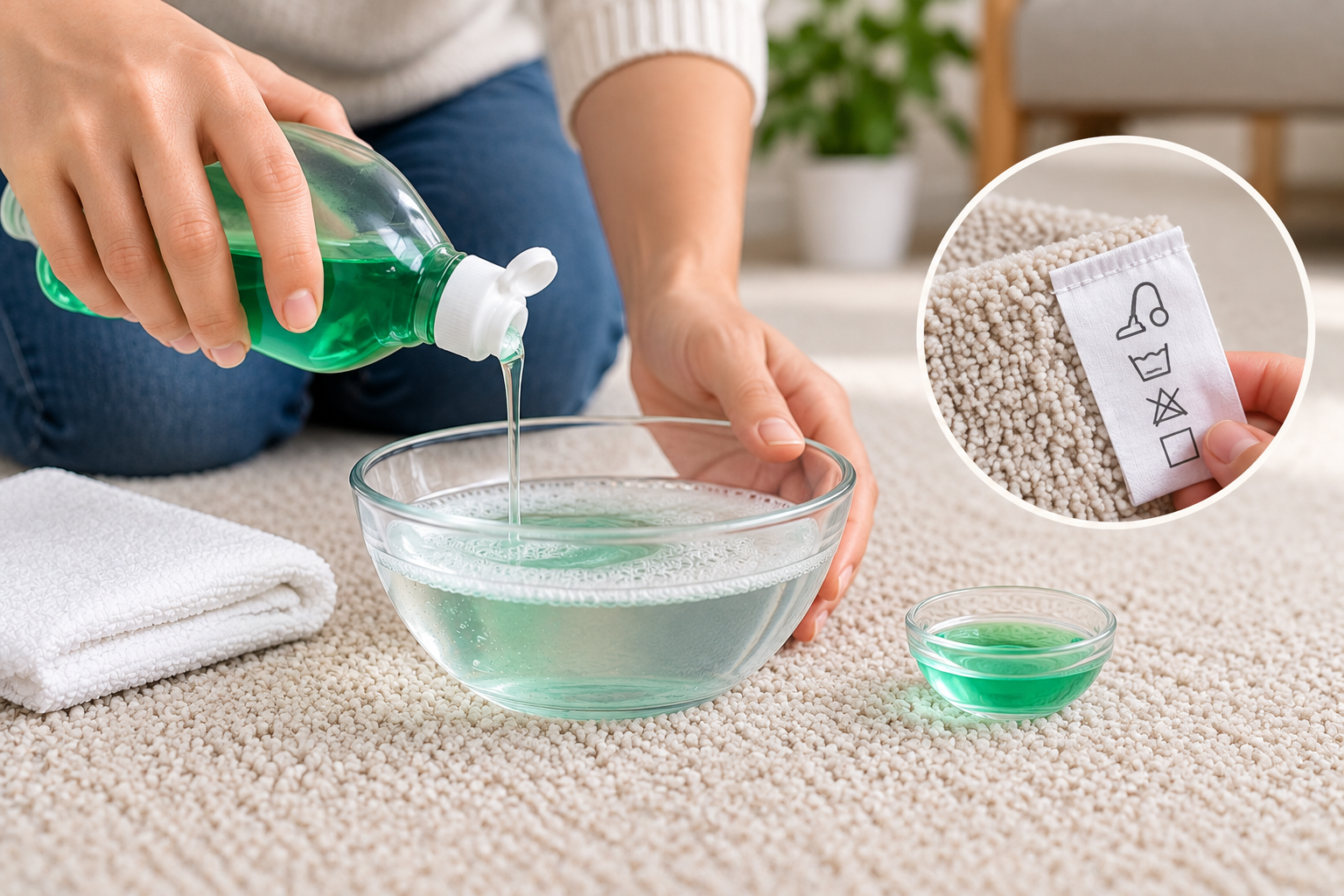
Fill a small container with warm water and add a small amount of mild, clear dishwashing liquid. You only need enough detergent to create a gentle cleaning solution, not a bowl full of suds.
Before applying anything to the carpet, check the carpet manufacturer’s cleaning instructions. Some carpet fibres and finishes have specific treatment requirements.
The goal is to have a mild solution that can help break down the remaining grease without soaking the carpet.
4. Gently Treat the Remaining Oil Stain
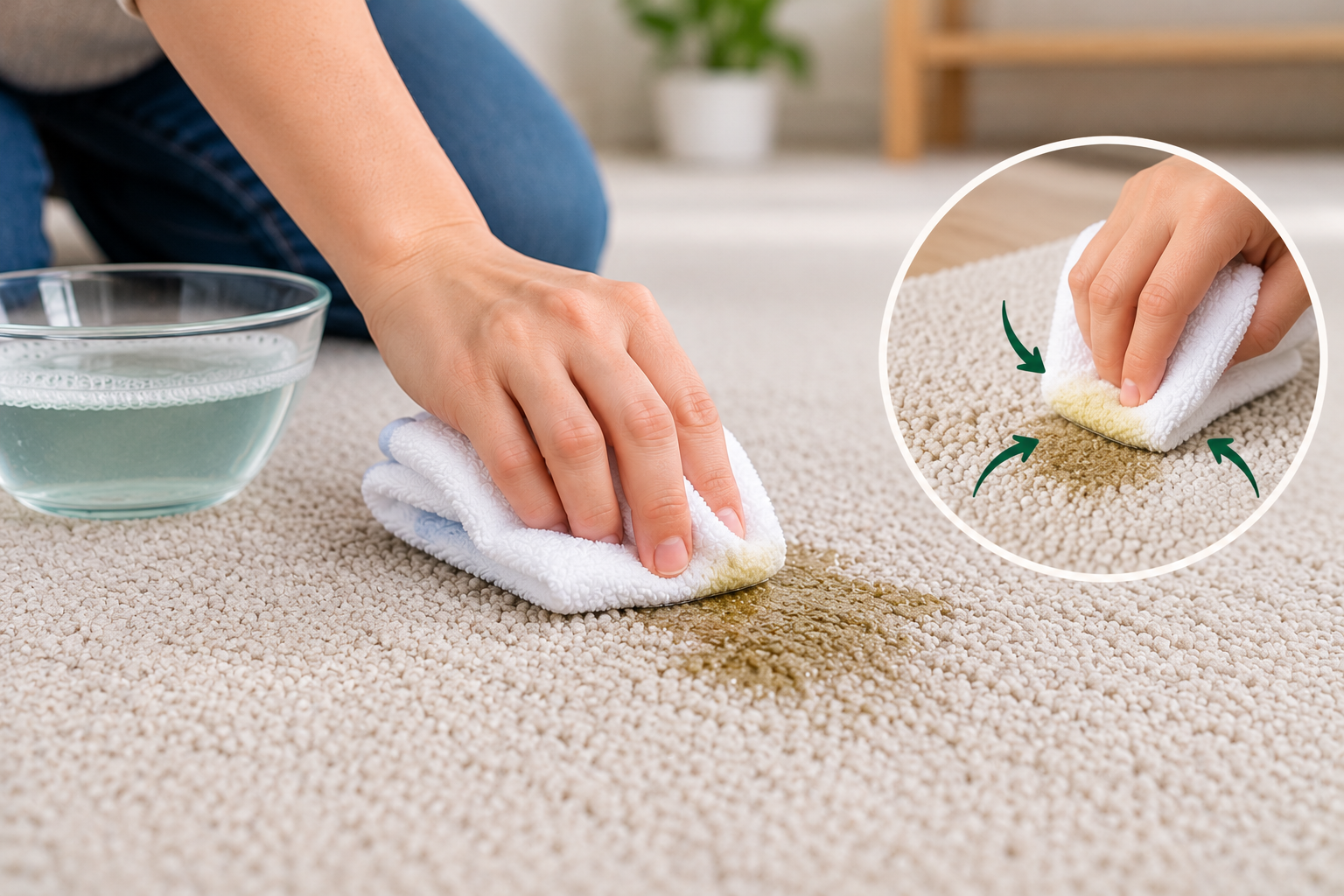
Take a clean cloth and dip one corner into the cleaning solution. Wring it out firmly so the cloth feels damp rather than wet.
Starting at the outside edge of the stain, gently dab towards the centre. As oil transfers from the carpet onto the cloth, turn the cloth to a clean section and continue dabbing.
Picture yourself slowly lifting the stain away rather than scrubbing it out. Work in several light passes instead of pressing hard or rubbing back and forth.
Keep the carpet as lightly damp as possible. Saturating the carpet can push the oil and cleaning solution deeper into the fibres or backing.
5. Rinse Away the Cleaning Solution
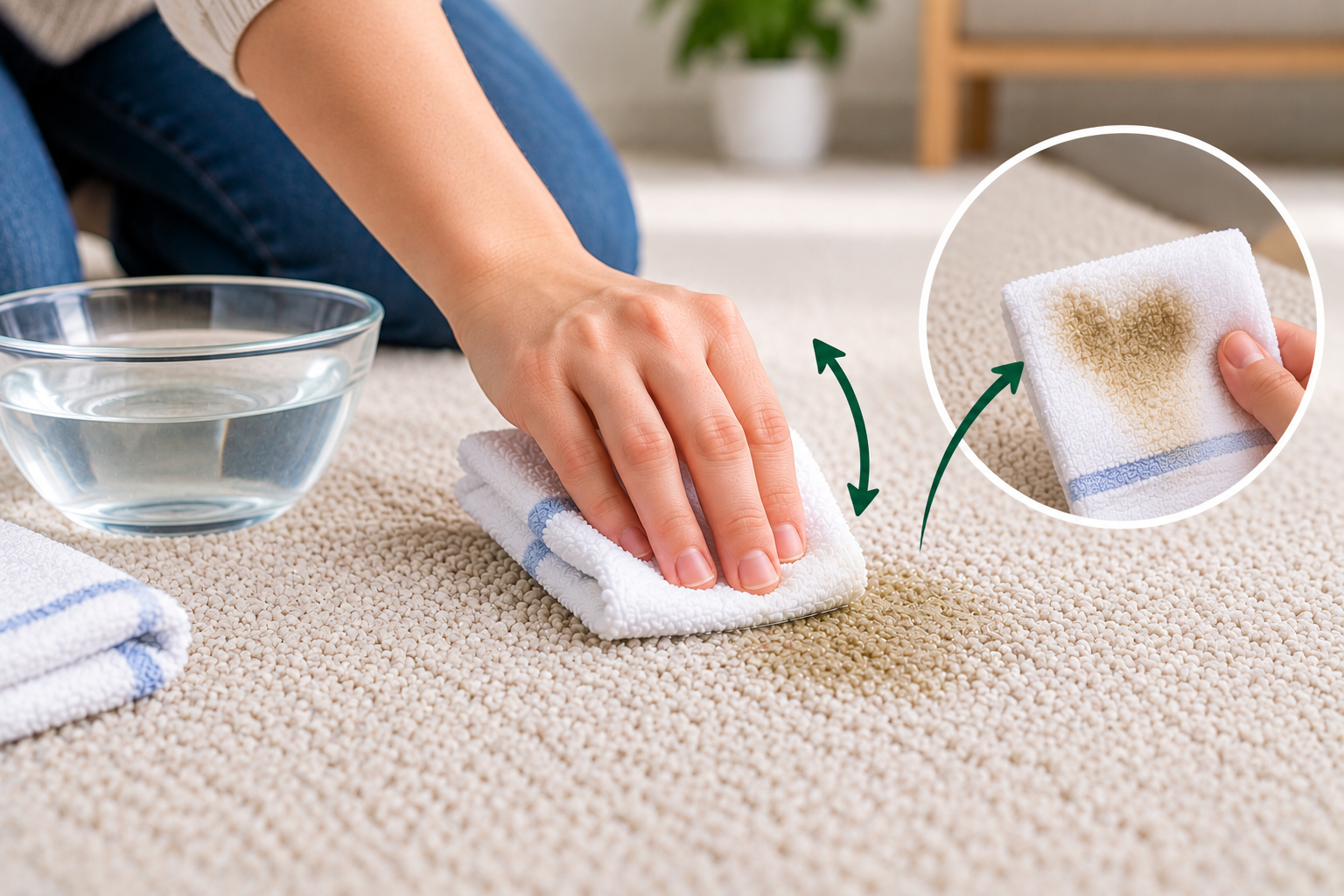
Once you have treated the stain, take a fresh clean cloth and dampen it with plain water. Wring it out well so it is only slightly damp.
Gently blot the treated area to pick up the remaining detergent. Move to a clean part of the cloth as detergent transfers onto it, and repeat until you have removed as much of the cleaning solution as possible.
Do not pour water directly over the carpet. You want to rinse away the detergent without soaking the carpet.
This step is important because leftover detergent can attract dirt. If too much cleaning solution remains in the fibres, the area may become visibly dirty again after it dries.
6. Dry the Carpet Thoroughly
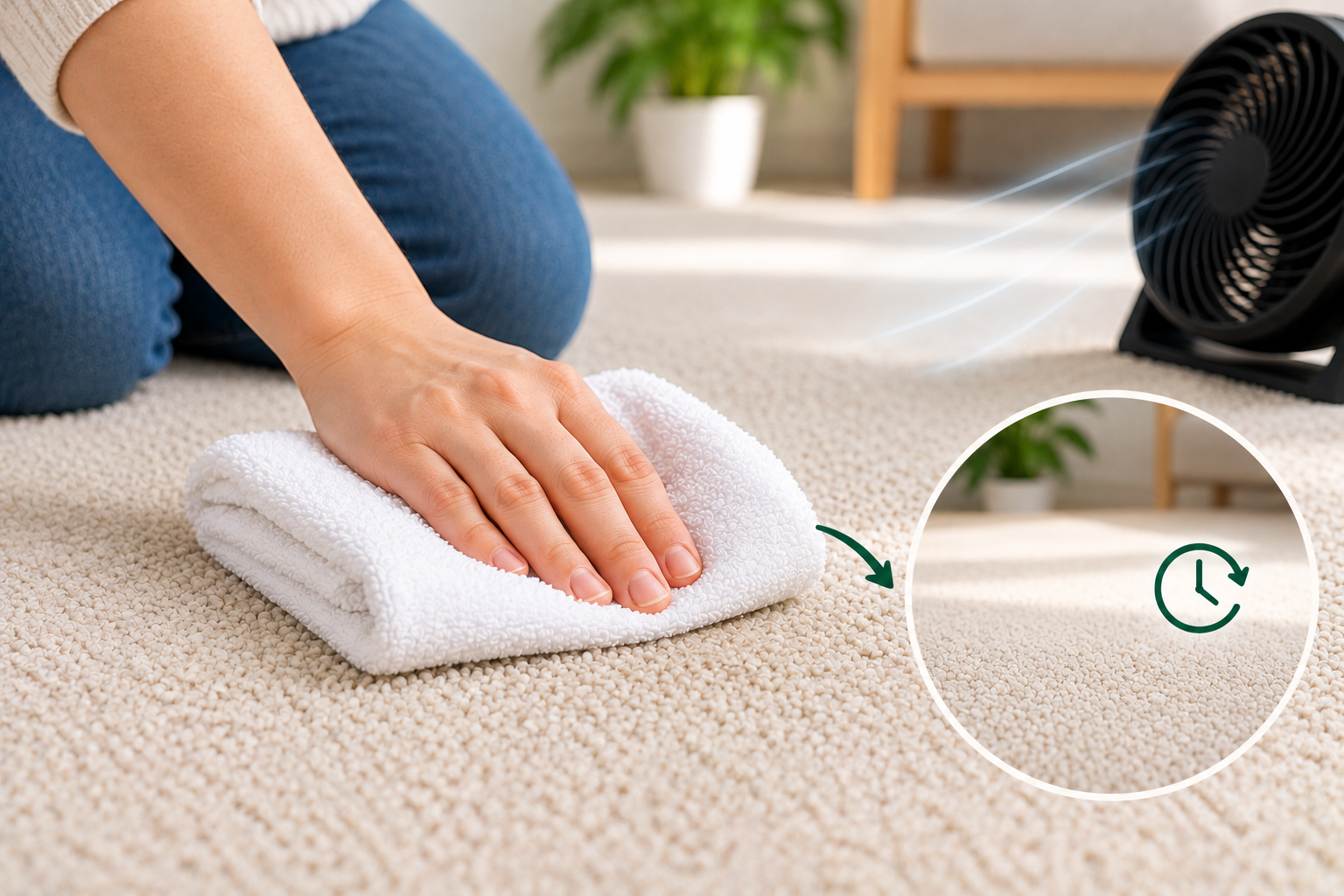
Take a clean, dry towel and place it over the damp area. Press down gently to absorb as much moisture as possible, then lift the towel and repeat with a dry section.
Once you have removed the excess moisture, allow the carpet to air-dry completely. If possible, improve airflow around the area to help it dry faster.
Keep people and pets from walking over the damp spot while it dries. Avoid judging the final result while the carpet is still wet because the appearance can change as the fibres dry.
In some cases, oil that has travelled deeper into the carpet can become noticeable again after the surface dries.
7. Check the Carpet and Repeat if Necessary
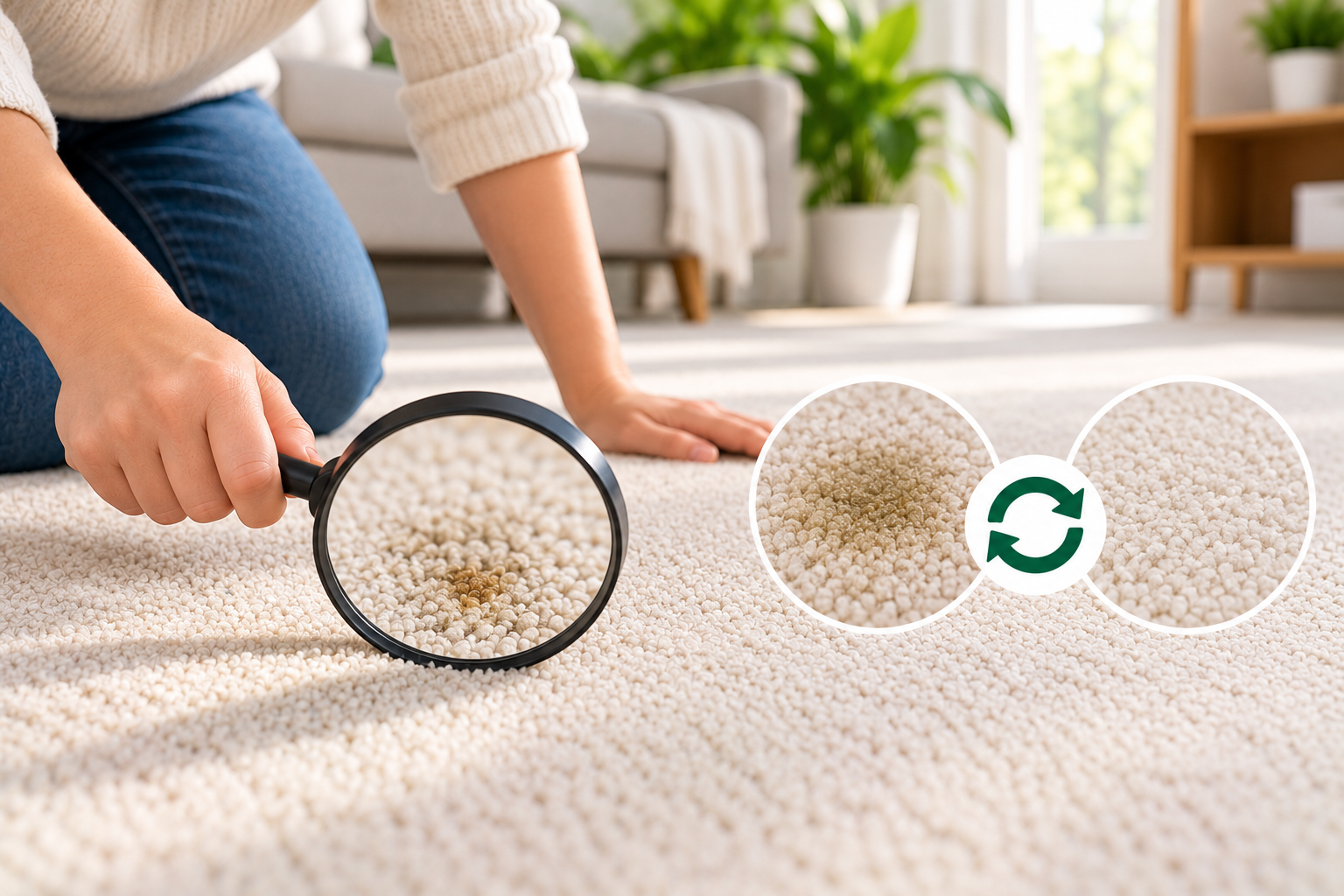
Wait until the carpet is completely dry, then inspect the area under good lighting. Run your fingers lightly over the fibres and look for any remaining dark patch, greasy feeling, unusual smell or discolouration.
If you can still see or feel oil, repeat the treatment from the cleaning stage. Work gently and use controlled dabbing motions rather than increasing the pressure.
A few careful passes are generally preferable to aggressive scrubbing. If the oil has penetrated deep into the carpet or the stain remains after repeated treatment, professional carpet cleaning may be the safer option.
For homeowners having little time to go through all these steps, there’s no need to worry. As a professional carpet cleaning service provider, MADS Cleaning has got you covered for all professional cleaning in Hobart.
How Do You Get Dried or Old Oil Stains Out of Carpet?
It is harder to move older oil stains because it has had time to penetrate the fibers of the carpet. The method is the same, but a bit more gentle:
- Remove any loose surface film first
- Apply an absorbent powder and thoroughly vacuum it
- Treat with a grease-cutting solution
- Blot it but don’t scrub
- Rinse lightly and dry thoroughly
- Repeat as needed
Sometimes stains are too deep to be treated multiple times with home remedies and it’s important to recognize it instead of trying. If the stain continues to reappear despite repeated attempts at home treatment, it most likely has made it to the carpet backing or underlay which means the carpet needs professional carpet cleaning instead of more home care.
How Do You Remove Different Types of Oil From Carpet?
The simple absorb, de-grease, rinse and dry process described above is applicable to all of these oils, but some types deserve special mention.
Cooking Oil (Vegetable, Olive, Canola)
- Blot immediately: Press a clean white cloth or paper towel firmly over the spill to absorb excess liquid. Do not scrub.
- Apply absorbent powder: Cover the stain generously with baking soda or cornstarch. Let it sit for 15–20 minutes to draw out the oil, then vacuum.
- Treat the residue: Apply an oil-solvent carpet cleaner or a mix of dish soap and warm water, then blot dry with a clean towel.
Grease and Butter
- Scrape the solids: Use a dull knife or spoon to gently lift any solid pieces off the carpet fibers. Avoid rubbing, which smears the grease deeper.
- Absorb the moisture: Apply baking soda or cornstarch to the remaining spot and leave it for 15 minutes before vacuuming.
- Wash and rinse: Blot the area with a few drops of grease-cutting dish soap mixed with warm water, then sponge with clean water and blot dry.
This method makes the rest of the carpet cleaning task go much easier if you want to clean grease from carpet or remove grease stains from carpet after cooking.
Beauty and Body Oils (Hair Oil, Cosmetics)
Beauty and body oils are most commonly found in bedrooms, bathrooms and dressing areas, such as hair oils and cosmetic oils.
- Blot the surface: Act quickly to blot up as much liquid as possible using a clean cloth.
- Extract the oil: Sprinkle the stain with an absorbent powder (baking soda or cornstarch) to lift the oils out of the fibers. Vacuum thoroughly.
- Clean the spot: Use a dry-cleaning solvent or a dish soap solution to remove any remaining discoloration.
Motor or engine oil
Motor or engine oil is typically darker, heavier, and more resistant than the rest and rubbing it will only make it worse
- Avoid rubbing: Never scrub motor oil, as its heavy, dark pigment will permanently stain the carpet fibers.
- Blot gently: Use paper towels to carefully lift as much wet oil as possible.
- Call a professional: Because engine oil is highly resistant and chemically dense, large or deeply set spills should be handled by a professional carpet cleaner to avoid permanent damage.
Can You Use Baking Soda to Remove Oil From Carpet?
Yes, baking soda is a very helpful initial tip:
- After blotting up as much grease as possible
- Let it sit on the affected area
- Vacuum it up, if necessary again.
But it is important to specify its function. While baking soda absorbs oil, it is not a substitute for good degreasing; for anything other than the lightest of stains, a proper degreasing step is still essential.
What Can You Use Instead of Baking Soda?
If applicable, cornflour, absorbent powders, or talcum/baby powder can all be used. These, like baking soda, are useful to absorb excess oil, but are not intended to be used in place of the complete cleaning procedure outlined above and the powder should be thoroughly vacuumed off before moving to the liquid cleaning stage.
What Should You NOT Do When Removing Oil From Carpet?
The same cautions apply whether you’re trying to remove grease from carpet or deal with a lighter cooking-oil mark.
If you’re searching for how do I get oil out of carpet without making things worse, it usually comes down to avoiding a handful of habits that can turn a manageable stain into a lasting one:
- Scrubbing the stain aggressively
- Flooding the carpet with water straight away
- Rubbing the stain outward instead of blotting inward
- Using excessive dishwashing liquid
- Leaving detergent residue behind
- Trying an unfamiliar chemical without a spot test first
- Reaching for harsh solvents that aren’t suited to your carpet
- Over-saturating the carpet backing
- Assuming the stain is gone before the carpet has actually dried
- Continuing aggressive DIY treatment on a stain that keeps coming back
Does the Type of Carpet Affect Oil Stain Removal?
Yes, the type can affect carpet stain removal, because no two carpet fibres are the same when it comes to oil and carpet cleaners. Before using anything new on your carpet, it’s best to know what it is you’re cleaning.
- Wool carpet: Use a softer touch for wool carpets. Avoid using strong scouring brushes and household cleaners that were not designed for wool fibers and use professional cleaning for hard to remove stains.
- Synthetic carpet: Treatment is generally good on synthetic carpet, depending on the type of carpet fibre, so it’s better to consult the manufacturer’s care instructions than taking a guess.
- Polypropylene or olefin carpet: Polypropylene or olefin carpet can be especially challenging with oily soils in particular, and if carpet has stubborn contamination, it may be necessary to use special cleaning methods different from what is used in the home.
- Carpet tiles: The one thing carpet tiles have over the rest. If a carpet tile is stained so badly that it cannot be cleaned, then it can be replaced; again, provided you follow the manufacturers instructions for maintenance in the interim.
How Can You Tell if Oil Has Reached the Carpet Underlay?
A surface stain and oil that’s penetrated beneath the carpet are two different problems. Signs the oil has gone deeper include the stain returning after you’ve cleaned it, a dark patch reappearing after the area is walked on, a greasy texture or odour that persists despite cleaning, or a spill large enough that it’s likely soaked straight through at the time.
As people walk on the oil buried beneath the ground or press down on it over time, the oil can creep back up to the surface, which’s why a stain may “reappear” days after you thought it was gone. After this, regular surface cleaning is typically not sufficient and a professional extraction is more feasible.
When Should You Consider Professional Carpet Cleaning?
A few situations where it’s worth calling in a professional rather than persisting with DIY:
- The stain covers a large area
- The oil is old or deeply set
- Motor or engine oil is involved
- The oil appears to have reached the backing or underlay
- The stain keeps returning despite treatment
- The carpet is wool or another delicate material
- DIY treatment hasn’t shifted it
- You’re concerned about damaging the carpet’s fibre or colour
Professional carpet cleaners can assess the specific carpet type and pick a treatment approach suited to it, which matters more for oil than for most other stains given how easily it can be pushed deeper by the wrong method.
How Can You Prevent Oil Stains on Carpet?
It’s often easier to prevent oil stains than to clean them, and applying a little care to the right places can make a huge difference. Use mats or runners in areas where spills are likely to happen such as in front of the stove, or a garage doorway. Keep paper towels or clothes within easy reach to clean up any spills as soon as they happen, in places where carpet is not present if possible.
Other items to keep at the door include oily shoes, and oil or grease should be stored in a safe place, not in a carpeted room. When the spill is caught early, often it takes just an easy blot; left alone it could be a much more tenacious, embedded stain.
What Are the Most Common Mistakes When Removing Oil From Carpet?
Beyond the specific actions to avoid during treatment, a few broader habits tend to make oil stains worse or harder to fully resolve:
- Rubbing instead of blotting
- Reaching for water before absorbing the oil
- Using far more cleaning solution than necessary
- Skipping the absorbent powder stage altogether
- Leaving detergent residue behind after rinsing
- Over-wetting the carpet
- Using harsh chemicals without testing them first
- Treating every carpet fibre the same way
- Cleaning only what’s visible on the surface
- Not checking back on the stain once it’s dried
- Continuing DIY treatment on a stain that’s reached the backing or underlay
How Often Should Carpet Be Deep Cleaned?
How often a carpet needs a proper deep clean depends on how much foot traffic, pets and children are present, how often spills occur, the type of carpet you have, and the overall indoor environment. None of that changes in the way a particular oil spill should be treated. Deal with it now, not at a regular scheduled clean. Even if you vacuum every day, a professional deep clean is still beneficial because it tackles the oily soil and overall dirt accumulation that everyday vacuuming can’t completely get rid of.
What Should You Check After Removing an Oil Stain?
Once you’re confident the area is dry, run through a quick check:
- Oil is no longer visible
- No greasy texture remains
- No detergent residue left behind
- No unusual odour
- No discolouration
- No damaged or distorted fibres
- Stain hasn’t returned after drying
- The treated patch doesn’t look noticeably different from the surrounding carpet
Frequently Asked Questions About Removing Oil From Carpet
Can baking soda remove oil stains from carpet?
It can absorb a good amount of the oil, especially if applied soon after blotting, but it generally needs to be followed by a degreasing step for anything beyond a very light stain.
Can dish soap remove oil from carpet?
Yes, a mild, clear dishwashing liquid mixed into warm water is effective at breaking down greasy residue once the excess oil has already been blotted and absorbed.
Does water remove oil from carpet?
Not on its own. Oil isn’t water-soluble, so water alone tends to spread it rather than lift it out, which is why a grease-cutting solution is needed for the residue.
How do you get cooking oil out of carpet?
Blot it up straight away, apply an absorbent powder before any liquid touches it, then follow the usual degrease, rinse and dry steps. This is the same method to use if you’re asking how to clean oil stains from carpet after cooking more generally.
What about oil paint on carpet?
Oil paint behaves differently from cooking or motor oil, since it can start to dry and bind to the fibres quickly. Blot up as much wet paint as possible without spreading it, avoid water on fresh paint, and treat remaining residue carefully with a product suited to both oil paint and your carpet fibre; once oil paint has fully dried, professional help is usually the safer option.
How do you get motor oil out of carpet?
The same core method applies, though motor oil is heavier and more stubborn, so larger or older motor-oil stains are often better handled by a professional.
How do you remove an old oil stain from carpet?
Follow the same absorb, degrease, rinse and dry process, just expect it to take a little longer and possibly more than one attempt, since the oil has had time to settle into the fibres.
Can oil stain carpet permanently?
It’s possible, particularly with old, large or deeply absorbed oil, though many stains can still be improved or removed with the right approach, and a professional clean can often help where DIY has stalled.
Should you scrub an oil stain on carpet?
No. Scrubbing tends to spread the oil and push it deeper into the fibres; blotting and gentle dabbing give better results.
Why does an oil stain keep coming back after cleaning?
This usually points to oil that’s reached the carpet backing or underlay, where foot traffic can push it back up to the surface over time. It’s a sign to call a professional rather than keep repeating the same surface clean.
When should you call a professional carpet cleaner for an oil stain?
When the stain is large, old or has reached the underlay, when motor oil is involved, when the carpet is a delicate material like wool, or when DIY treatment simply hasn’t worked after a reasonable attempt.
Conclusion: Remove Oil From Carpet Before the Stain Sets
Oil stains respond best to quick action: the sooner you blot, absorb, vacuum, degrease, rinse, dry and inspect, the easier the stain is to shift. Scrubbing and heavy wetting tend to work against you rather than for you, and it’s worth factoring in your carpet’s fibre type and the kind of oil involved before choosing a cleaning product.
For stains that are old, large, or keep returning no matter how carefully you treat them, that’s usually a sign it’s time to bring in a professional rather than keep working at it yourself. If you’re dealing with a stubborn oil stain or need a broader cleaning service in Hobart MADS Cleaning & Gardening can assess the carpet and treat it properly the first time.
Contact us and receive a quota for your carpet cleaning.