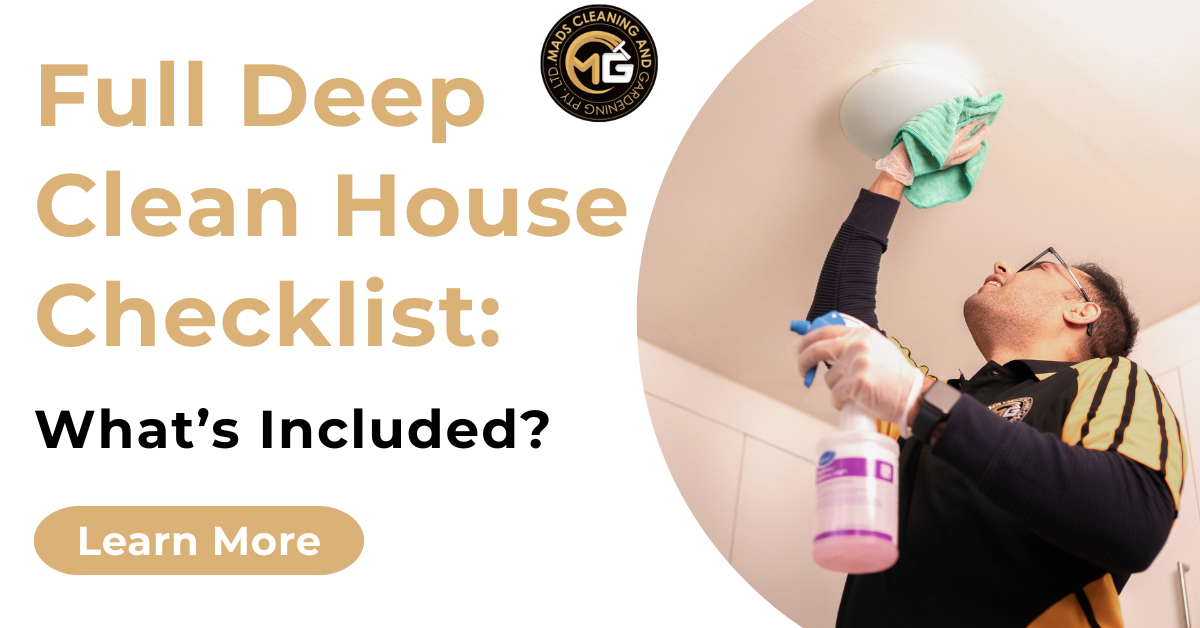
 If you have ever looked at your home and felt that a standard Sunday tidy-up just isn’t cutting it anymore, you are likely in need of a deep clean. But what exactly is the difference? While a regular clean focuses on surface-level maintenance, wiping down benches and a quick vacuum, a full house deep cleaning checklist targets the grime, dust, and bacteria that accumulate in the places you usually ignore.
A residential deep cleaning checklist involves a comprehensive scrub of your home’s “skeleton,” including skirting boards, inside appliances, and deep into the grout of your wet areas. Whether you are living in a family home, maintaining a city flat with a deep clean apartment checklist, or preparing for a fresh start with a move-in deep cleaning checklist, having a structured plan is the only way to ensure nothing is missed.
At Mads Cleaning & Gardening, we believe a clean home is the foundation of a healthy life. If the task feels too daunting to tackle alone, you can always look into a professional house cleaning service in Hobart to do the heavy lifting for you.
Deep House Cleaning Checklist
- Dust High-Reach Areas — Clean ceiling fans, vents, light fixtures, and the tops of cupboards and tall furniture.
- Clean Skirting Boards & Baseboards — Remove accumulated dust, pet hair, and grime from edges and corners.
- Deep Clean the Kitchen — Degrease benchtops, splashbacks, cupboards, stovetop, range hood, and sink.
- Clean Inside Appliances — Thoroughly clean the oven, microwave, dishwasher, toaster, and other neglected appliance areas.
- Scrub Bathrooms & Grout — Clean shower screens, tiles, grout, bath areas, vanity, mirrors, and toilet surfaces.
- Remove Mould & Sanitise Wet Areas — Check bathroom corners and moisture-prone areas for mould and disinfect thoroughly.
- Deep Clean Bedrooms — Dust wardrobes and bedside areas, clean skirting boards, wash bedding, vacuum mattresses, and clean under beds.
- Clean Windows, Sills & Blinds — Remove dust, dirt, fingerprints, and debris from glass, window tracks, sills, and blinds.
- Deep Clean Floors & Upholstery — Vacuum under furniture and appliances, mop floors, and thoroughly vacuum couches, rugs, and carpets.
- Disinfect High-Touch & Hidden Areas — Clean door handles, light switches, bin lids, furniture tops, behind appliances, and other commonly missed spots.
When a Deep Clean Makes Sense
Knowing how often you should deep clean your house depends largely on your lifestyle, but generally, a deep reset is recommended every 3 to 6 months. Here is when it becomes essential:
- Before Moving In: You want to sanitise every surface before your furniture arrives.
- Before Moving Out: To ensure you get your bond back or present a pristine home for sale.
- After Renovations: Construction dust settles in every crack and crevice.
- Seasonal Reset: A “Spring Clean” helps clear out allergens and winter dust.
- Post-Illness: Sanitising high-touch points to stop the spread of germs.
- Special Occasions: Ensuring your home is guest-ready and sparkling from top to bottom.
What Does Deep House Cleaning Include?
Using a deep cleaning room-by-room checklist is the most efficient way to maintain momentum. By focusing on one area at a time, you avoid the “overwhelm” of seeing the whole house as one giant task. We recommend following this sequence, starting with the hardest rooms (kitchen and bathroom) first, to ensure your energy is used where it is needed most.
Pro Tip: Bookmark this guide on your phone to tick off items as you go! For a more general overview, you can also check out our standard house cleaning list.
Kitchen Deep Cleaning Checklist
The kitchen is the highest-traffic area in most homes and requires the most “degreasing.” Your deep clean kitchen checklist should include:
- Top Surfaces: Remove cobwebs and dust from the tops of cupboards and light fixtures.
- Cupboards: Wipe down all cupboard fronts, handles, and internal shelves.
- Degreasing: Scrub benchtops, splashbacks, and the area behind the stove.
- Appliances: Clean the stovetop, range hood filters, and the sink/tapware.
- Inside Jobs: Clean inside the microwave, dishwasher, and oven. Need help? See our oven cleaning service in Hobart.
- Floors: Move the fridge if possible to vacuum behind it, then mop with a heavy-duty disinfectant.
- Touch Points: Disinfect light switches, door handles, and bin lids.
Bathroom Deep Cleaning Checklist
Bathrooms are prone to moisture-related issues. A checklist for deep cleaning bathroom areas must focus on sanitisation:
- Shower & Bath: Scrub shower screens to remove limescale, clean tiles, and use a brush on the grout.
- Mould Removal: Check corners for visible mould buildup. If it’s out of control, our mould cleaning service can help.
- The Toilet: Sanitise thoroughly, paying special attention to the base and the floor behind the porcelain.
- Vanity & Mirrors: Polish mirrors and wipe out the inside of vanity drawers.
- Ventilation: Dust the exhaust fan cover and wipe down light hardware.
- Floors: Thoroughly vacuum and mop, ensuring hair and dust are removed from corners.
Bedroom Deep Cleaning Checklist
Your sanctuary should be free of allergens. Follow this deep cleaning bedroom checklist for a better night’s sleep:
- Dusting: Dust ceiling fans, lampshades, bedside tables, and the tops of wardrobes.
- Walls & Skirtings: Spot clean scuff marks on walls and wipe down all skirting boards.
- Bedding: Strip the bed, wash all linens, and vacuum the mattress.
- Hidden Areas: Vacuum under the bed and behind wardrobes where dust bunnies hide.
- Floors: If you have carpets, consider a rug cleaning service or carpet cleaning service to extract deep-seated dust and mites.
Living Areas, Hallways, and Entryways
These areas are where guests form their first impressions. Use a full house deep cleaning checklist approach here:
- Dust & Polish: Wipe down shelves, electronics, picture frames, and décor.
- Glass: Clean internal windows, glass doors, and mirrors.
- Upholstery: Vacuum the couch, including under the cushions. For deep stains, see our couch cleaning service.
- High Traffic: Focus on cleaning the front door, entryway flooring, and wiping fingerprints off light switches.
Laundry and Utility Areas
Often forgotten, the laundry can be a magnet for lint and moisture:
- Cabinetry: Wipe down cabinet fronts and tops.
- Sinks: Scrub the utility sink and splashbacks.
- Appliance Exterior: Wipe down the washing machine and dryer, and clean out the dryer lint filter.
- Floors: Vacuum and mop, paying attention to the space behind the machines. If the tile grout looks dark, our floor cleaning service can restore it.
Hidden Areas Often Missed in a Deep Clean
A true deep clean is found in the details. According to our deep cleaning tips and checklist, these are the spots people most frequently forget:
- Ceiling Fans and Vents: Dust tends to cake onto fan blades and vent slats.
- Baseboards and Skirting Boards: These collect a surprising amount of pet hair and dust.
- Window Sills and Ledges: Great for collecting dead insects and outdoor soot.
- Tops of Tall Furniture: If you can’t see it, it’s probably dusty.
- Inside the Toaster & Behind the Fridge: Old food particles can attract pests.
- Blinds: Individual slats are tedious but essential. Check out our blind fitting cleaning services if they need a professional touch.
Deep Cleaning for Different Home Setups
Not every home requires the same strategy.
- Apartment Living: Use a deep clean apartment checklist that focuses on balcony glass, sliding door tracks, and compact storage areas where dust settles quickly.
- Move-In Deep Cleaning: This is about hygiene. Focus on cleaning the inside of every drawer, cupboard, and wardrobe before your furniture touches them.
- Rental Considerations: If you are a tenant, focus on “wear and tear” items like oven grease and carpet coffee stains to ensure a smooth bond transition.
How to Prepare Your Home Before a Deep Clean
To make the process smoother, follow this logical order:
- Declutter First: You cannot clean a surface you cannot see. Put away toys, mail, and clothes.
- Top to Bottom: Always dust the ceiling and fans first, so the falling dust can be vacuumed up later.
- Wet Areas Next: Apply cleaning products to the shower and oven, and let them sit while you do dry tasks.
- High-Touch Points: Disinfect handles and switches once the dusting is done.
- Finish with Floors: Vacuuming and mopping should always be the final step.
Common Deep Cleaning Mistakes to Avoid
- Cleaning Floors First: As mentioned, always work from the top down.
- Using the Wrong Products: Using bleach on natural stone or abrasive pads on stainless steel can cause permanent damage.
- Skipping Ventilation: Always open windows when using cleaning chemicals to protect your respiratory health.
- Trying to do it all at once: Don’t burn out. Use a checklist for deep cleaning and spread the work over a weekend if necessary.
Final Checklist Wrap-Up
A structured deep clean house checklist is the difference between a house that looks clean and a house that is clean. By following a room-by-room guide, you ensure that every corner of your home, from the kitchen vents to the bedroom skirting boards, is addressed.
If you’re feeling overwhelmed or simply don’t have the 8 to 12 hours required for a thorough deep clean, let the professionals handle it.
Ready for a sparkling home? Contact Mads Cleaning & Gardening today to book a professional deep clean!
FAQs on Deep Cleaning
Will deep cleaning remove stains and marks completely?
While deep cleaning removes 99% of dirt and grime, some permanent stains (like bleach spills on carpet or deep scratches in wood) may require restoration rather than just cleaning.
What should be done during a deep clean?
It should include everything in a regular clean plus: skirting boards, inside windows, inside appliances, wall spotting, grout scrubbing, and dusting of all high-reach areas.
How long does it normally take to deep-clean a house?
For a standard 3-bedroom home, expect a deep clean to take between 8 and 14 man-hours, depending on the current condition of the property.
What should I expect from a deep cleaning?
You should expect your home to feel “reset.” Surfaces should be smooth to the touch, the air should feel fresher, and the “hidden” areas like window tracks and baseboards should be debris-free.
Is it worth paying for a deep clean?
Yes. Professional cleaners have industrial-grade equipment and chemicals that can achieve results impossible with standard domestic tools.
Why should you deep clean your house?
Beyond aesthetics, it removes allergens, prevents the buildup of mould and pests, and extends the lifespan of your flooring and fixtures.