 Floating floors have become the go-to choice for Hobart homeowners seeking the look of luxury without the price tag of solid hardwood. However, because of their unique construction, knowing how to clean floating floors correctly is the difference between a floor that lasts decades and one that warps within months.
The secret to cleaning floating floorboards lies in a “low-moisture” approach. Because these floors are not fixed to the subfloor, they are susceptible to movement and moisture damage if treated like traditional tile or stone. Whether you are dealing with laminate, hybrid, or timber, the best way to clean floating floors is to be gentle, stay dry, and act fast on spills.
What Are Floating Floors?
Floating floors refer to a “click-lock” flooring system where the boards are joined together but not glued or nailed to the subfloor. Common types include laminate, luxury vinyl plank, and engineered timber. Because they “float” as a single unit, they are highly sensitive to moisture and humidity changes.
Before Cleaning Floating Floorboards: What To Know
Before you grab a bucket and mop, you need a solid floating floor cleaning guide. Unlike solid timber, floating floors are often made of composite materials that can swell if water seeps into the joints. Understanding floating floor care tips starts with knowing your floor’s enemies.
What to Avoid When Cleaning Floating Floorboards
Avoiding these floating floor cleaning mistakes will save you thousands in replacement costs:
- Steam Mops: The high-heat steam can force moisture into the joints and melt the adhesive or warp the core.
- Excess Water: Never “flood” the floor. Standing water is the primary cause of buckling.
- Bleach and Ammonia: These harsh chemicals strip the protective wear layer and dull the finish.
- Abrasive Tools: Steel wool or scouring pads will leave permanent micro-scratches.
- Wax or Oil-based Cleaners: These create a sticky residue that attracts more dirt and makes the floor slippery.
For beginners who want a proper floor cleansing but do not know where to start, Mads Cleaning provides professional floor cleaning service throughout Hobart.
How to Clean Floating Floors: Step-by-Step Guide
Step 1: Prepare the Floor Before Cleaning
Efficiency starts with preparation. Clear the area of loose items like rugs, toys, and small furniture. This is also the best time to perform “preventive maintenance.”
- Check for Spills: Identify any sticky spots or dried-on debris that need pre-treatment.
- Furniture Care: Ensure you have felt pads under all furniture legs to prevent scratches during the cleaning process.
- Entryway Mats: If you don’t have them, place mats at every entrance to trap grit before it reaches your floating boards.
Step 2: Dry Clean the Floor First
You must remove loose grit before introducing any moisture. Sweeping or vacuuming prevents you from essentially “sandpapering” your floor with dirt while mopping.
- Soft-bristled Broom: Best for a quick daily sweep.
- Microfibre Dust Mop: Excellent for trapping fine dust that brooms often miss.
- Vacuuming: Use a vacuum with the beater bar turned off (the hard floor setting) to avoid scratching the surface.
- Targeted Areas: Pay close attention to corners, edges, and the dark spaces under furniture where dust bunnies congregate.
Step 3: Choose a Safe Cleaning Solution
When it comes to the best cleaning product for floating floors, less is usually more.
- pH-Neutral Cleaners: Specifically designed for laminate or vinyl.
- The Vinegar Option: A 50/50 mix of white vinegar and water is a classic DIY solution, though use it sparingly as the acidity can dull some finishes over many years.
- Gentle is Key: Avoid any “all-purpose” cleaners that contain citrus oils or heavy fragrances.
Step 4: Damp Mop the Floor Carefully
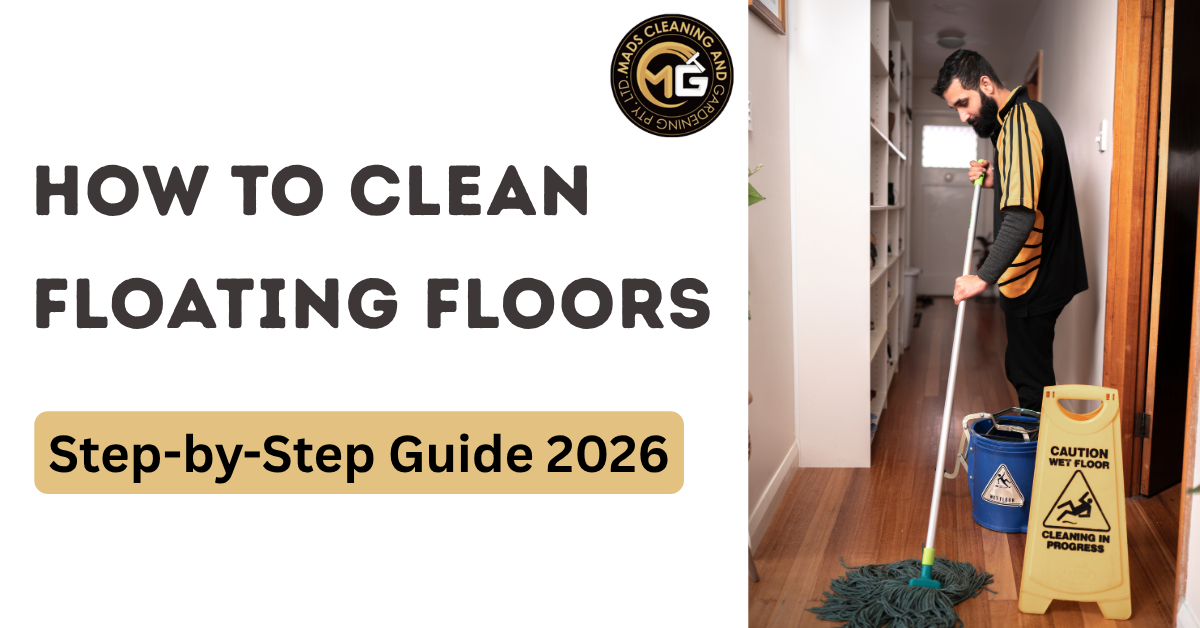
This is the most critical step. Use a spray mop or a microfibre mop that is only “barely damp” to the touch.
- Wring it Out: If using a traditional bucket, wring the mop until it feels almost dry.
- Small Sections: Work in 2-metre increments to ensure no liquid sits on the surface for more than a minute.
- The Golden Rule: If the floor takes more than 2 minutes to air dry, you are using too much water.
Step 5: Spot Clean Spills and Marks Immediately
Don’t wait for “cleaning day” to handle a spill.
- Wipe liquids as soon as they hit the floor using a soft cloth.
- For scuff marks on floating floors, a damp microfibre cloth with a tiny drop of pH-neutral soap usually does the trick.
- Fast cleanup prevents moisture from seeping into the “click” joints and causing “peaking” (where the edges of the boards lift).
Step 6: Let the Floor Dry Properly
Even a tiny bit of moisture should be accounted for.
- Open windows or turn on a fan to encourage airflow.
- If you see streaks or puddles, go over the area with a dry microfibre cloth immediately.
- Avoid heavy foot traffic (especially kids and pets) until the surface is completely dry to prevent footprints.
Step 7: Use Preventive Care to Keep Floors Cleaner for Longer
Maintaining your floor is easier than fixing it.
- Place rugs in high-traffic hallways.
- Trim your pets’ nails regularly to prevent deep scratches.
- Clean your cleaning tools! A dirty mop just moves grime around.
Prevention is better than a cure. Knowing how to clean grout in floor tiles can sustain your floors for a longer period.
Reach Out to Mads Cleaning for Expert Floating Floor Cleaning
Sometimes, daily maintenance isn’t enough to tackle years of built-up grime or stubborn stains. As a local cleaning expert in Hobart, Mads Cleaning specialises in the delicate care required for floating floor systems.
Our professional floor cleaners use industry-grade, pH-neutral solutions and low-moisture technology to restore the shine to your home. Whether you are moving out or just need a seasonal refresh, our expert cleaning services provide:
- Safe, floor-friendly methods that protect your warranty.
- Deep cleaning of joints where dust accumulates.
- Stain and scuff removal that DIY methods might miss.
Save your time and your floors, contact Mads Cleaning for professional support in Hobart today.
How Often to Clean Floating Floors?
Consistency is the best form of floating floor maintenance.
- Daily: Sweep or dust-mop high-traffic areas to remove abrasive grit.
- Weekly: A damp mop with a safe solution to remove light grime.
- Immediately: Clean all spills, mud, or pet accidents.
The Best Way to Clean Floating Floorboards (By Type!)
How to Clean Floating Laminate Floors
Laminate is essentially a high-density fibreboard with a photographic layer. It is the most moisture-sensitive of the bunch. The best way to clean floating laminate floors is to use a dedicated laminate-safe cleaner and work in small sections, drying as you go.
How to Clean Floating Timber Floors
Engineered timber has a real wood veneer. Treat it like a hardwood floor, but with even less water. When cleaning floating timber floors, always mop with the grain of the wood to avoid streaking and ensure you use a timber-safe cleaner that won’t strip the oil or polyurethane finish.
How to Clean Floating Vinyl Floors
Vinyl is more water-resistant than laminate, but the “floating” nature means the subfloor can still be damaged by floods. When cleaning floating vinyl floors, a damp microfibre mop and a vinyl-safe cleaner work best. Avoid harsh scrubbing even if the surface feels “tough.”
Not all materials are floor-friendly. Knowing how to clean your floors makes the difference between cleaning and destroying your home.
Removing Stains on Floating Floors
For stubborn spots:
- Scuff marks: Use a tennis ball or a pencil eraser to gently “rub” the mark away.
- Stubborn marks: Use a tiny amount of rubbing alcohol on a cotton ball for ink or permanent markers.
- Sticky residue: A paste of baking soda and a little water can lift grime, but wipe it away immediately with a damp cloth and dry the area.
Tips for Keeping Floating Floors Clean and Scuff-Free
- Sunlight Protection: Close blinds during the hottest part of the day to prevent UV fading.
- No Dragging: Never slide furniture across the floor; always lift it.
- Rugs: Use non-slip rug pads that are labelled “breathable” to avoid trapping moisture under the rug.
How to Clean and Disinfect Floating Floors
To sanitise floating floors safely, avoid “hospital-grade” disinfectants, which are often too acidic. Instead, use a mild disinfectant spray applied directly to your mop cloth (not the floor). Ensure the area is dried quickly to prevent the disinfectant from sitting on the finish.
Our Warehouse Floor Scrubbing Services in Hobart deliver deep and effective cleaning for all types of hard floors, removing grease, oil stains, and dirt buildup that simple sweeping can’t handle. Using advanced scrubbing machines and eco-friendly cleaning agents, we leave your warehouse floors spotless and non-slippery.
Common Do’s And Don’ts When Cleaning Floating Floors
- DO sweep daily to prevent scratches.
- DO use a microfibre mop for a streak-free finish.
- DO clean spills within seconds.
- DON’T flood the floor with a soaking wet mop.
- DON’T use a vacuum with a rotating beater brush.
- DON’T use wax or polish unless specified by the manufacturer.
FAQs About Floating Floor Cleaning
Can floating floors be mopped?
Yes, but only with a damp mop, never a wet one. Use a spray mop for the safest results.
Do floating floors move?
Yes, they expand and contract with temperature and humidity. This is why “expansion gaps” are left at the walls. Using too much water can cause them to expand too much and “buckle.”
Can you clean floating floors with vinegar?
Yes, a diluted solution (1 part vinegar to 10 parts water) is generally safe for occasional use, but a pH-neutral commercial cleaner is better for the long-term health of the finish.
Can You Use a Steam Mop on Floating Floors?
No. Most manufacturers will void your warranty if you use a steam mop. The moisture and heat can delaminate the layers and cause permanent swelling.
What to Clean Floating Floors With?
A microfibre mop, a spray bottle with pH-neutral cleaner, and a soft-bristled broom are your three essential tools.
Can You Polish Floating Floorboards?
Generally, no. Most floating floors have a factory-sealed wear layer that does not require polishing. Adding wax or polish can create a greasy buildup that is very difficult to remove.
Final Thoughts
Learning how to clean floating floors doesn’t have to be complicated. By using less water, choosing the correct products, and protecting the finish with felt pads and mats, you can maintain that “just-installed” look for years.
Remember, regular maintenance is the key to longevity. If your floors have lost their lustre or you’re facing a tough cleanup, professional help is just a call away.
Contact Mads Cleaning or book an appointment today for expert same-day cleaning services in Hobart.