Does your office appear to be clean but still feel dusty, dirty, or unhealthy? Partnering with professional office cleaning services in Hobart can help address hidden hygiene issues that routine cleaning often overlooks.
The fact is, cleaning an office is much more complicated than cleaning a home. Even little, everyday cleaning errors that can be prevented in offices have devastating repercussions, such as not only ruining valuable furniture and electronics, but also impacting staff productivity drastically, as well as spreading contagious diseases. In the absence of an effective way of cleaning your office, you may jeopardise the health and reputation of your business.
This detailed guide will include the largest cleaning errors that businesses make and offer practical answers to office cleaning, and help you have your workspace clean, hygienic, and productive.
Key Takeaways
- A clean office helps keep employees healthy, productive, and motivated.
- High-touch surfaces like door handles, keyboards, and switches need regular disinfection.
- Using the wrong cleaning products can damage furniture, glass, floors, and electronics.
- Don’t forget air vents, AC filters, bins, and hidden areas where dust and germs can build up.
- Clean floors properly—vacuum or sweep before mopping and avoid using too much water.
- Windows and glass need the right products and techniques to avoid streaks and residue.
- Follow a daily, weekly, and monthly cleaning routine to keep standards consistent.
- Use eco-friendly, non-toxic products and microfibre cloths where possible.
- Professional office cleaning can provide deeper cleaning, consistency, and specialised equipment.
- Regular cleaning protects your office, employees, and business reputation.
Why Proper Office Cleaning Matters
A clean workplace is one of the most valuable business assets. Following a structured commercial cleaning checklist ensures consistency, reduces errors, and maintains high standards across all areas of your office. It directly impacts three key areas:
- Productivity and Morale: A clean environment that is free of clutter will make the employees focus and feel valued, resulting in an increase in morale and concentration.
- Employee Health and Safety: Good hygiene will significantly reduce the transmission of germs, and this will minimise sickness absences. Workplace safety is also guaranteed by preventing cleaning mistakes made by office cleaning personnel, such as the use of the wrong chemicals.
- Company Reputation: An immaculate reception area and meeting rooms provide clients and visitors with a solid and positive first impression regarding your professionalism and attention to detail.
Investing time in proper cleaning practices and following a detailed office cleaning checklist not only prevents costly mistakes but also protects your office assets, reduces long-term maintenance costs, and supports a healthier, more productive work environment.
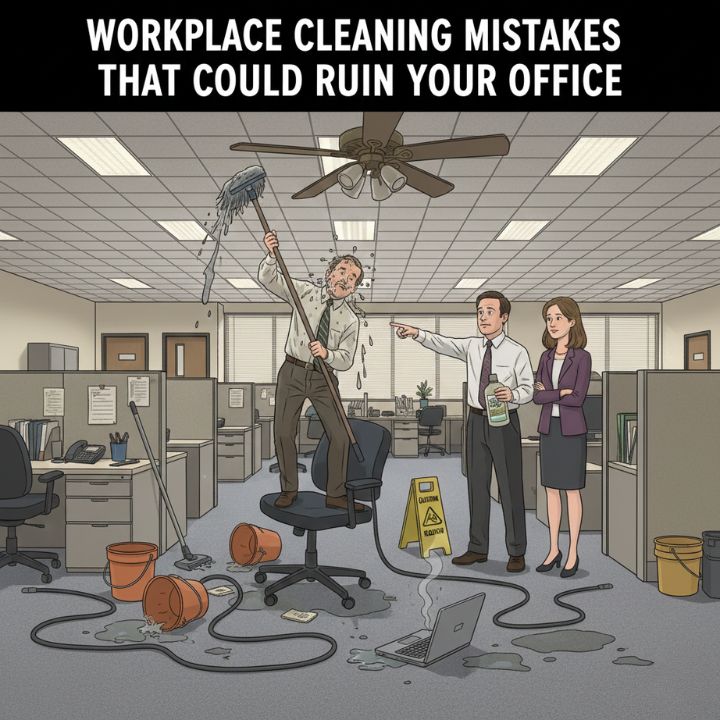
7 Common Workplace Cleaning Mistakes That Could Ruin Your Office
Mistake 1: Ignoring High-Touch Surfaces
The Mistake: Only give attention to noticeable areas (such as floors) but not the germ hotspots. Objectives such as door handles, light switches, keyboards, common printers, and water cooler buttons are touched dozens of times a day.
The Consequence: These surfaces are the main centre of bacteria and viruses and contaminate the office dramatically, increasing the morbidity and absenteeism rates.
Mistake 2: Using the Wrong Cleaning Products
The Mistake: Using generic, harsh, or abrasive household chemicals on all surfaces.
The Consequence: A powerful cleaner can etch glass, strip the finish off of wood desks, destroy sensitive computer displays and corrode stainless steel. There is also a risk of releasing toxic fumes due to the use of chemicals that may be too harsh or when they are mixed improperly, which destroys the surfaces or harms the health of the employees.
Mistake 3: Overlooking Air Vents & AC Filters
The Mistake: Not including HVAC systems, air vents, and air conditioning filters in the regular cleaning schedule or failing to engage a professional ac cleaning service.
The Consequence: The accumulation of dust and other allergens in the ducts and recirculation of the same in the office results in poor indoor air quality, more allergic reactions, and low performance of the HVAC. This is one of the mistakes that are committed by cleaning offices, and it can have a direct impact on the health of employees.
Mistake 4: Not Emptying Bins Daily
The Mistake: Leaving waste, especially in the kitchen and breakroom areas, to sit overnight or over the weekend.
The Consequence: Leftover food waste and damp rubbish will produce foul smells, support bacteriology, and pests. It is a simple hygiene breakdown that contributes to the destruction of the office environment.
Mistake 5: Cleaning Office Floors Incorrectly
The Mistake: Hard floors are mopped without sweeping or vacuum cleaning them first, using dirty mops or adding too much water. In the case of carpet cleaning, scrubbing the stains rather than blotting is recommended.
The Consequence: This tends to push dirt around, creates sticky residue which attracts even more dirt, and may even cause permanent damage, including mould or stains to be entrenched in carpet fibres of its own accord.
Mistake 6: Neglecting Under-Desk & Hidden Areas
The Mistake: Cleaning only those surfaces that can be seen, without giving any attention to such areas as under desks, behind monitors, cable management trays and the tops of high cupboards.
The Consequence: This results in the accumulation of a lot of dust, which not only appears unsightly, but also clogs and overheats electronics, resulting in shorter life as well as making air quality poor.
Mistake 7: Improper Window & Glass Cleaning
The Mistake: Using paper towels, leaving residue from cleaning products, or cleaning glass in direct sunlight instead of relying on professional window cleaning services.
The Consequence: Paper towels leave lint, wrong products leave films and cleaning in the sun leaves streaks that dry up immediately. It leads to streaked glass and dirty windows that lessen the appearance of the office as professional and limit the natural light presence in the office.
Consequences of These Office Cleaning Mistakes
The accumulation of such typical errors in the everyday cleaning of the office goes beyond the appearance of an untidy office:
- Damage to Assets: Improper use of the products and neglect cause costly and untimely replacement of furniture, flooring, and delicate electronic devices.
- Poor Indoor Air Quality: The failure to maintain vents, dry dusting and leaving dust accumulate in the environment breeds sickness and allergies, which in turn cause sickness and absenteeism.
- Reduced Employee Morale: An employee office that is either visibly or subtly unclean sends staff the message that they are undervalued and unmotivated, and this affects concentration and retention in the long run.
- Negative Client Impressions: Dirty window, greasy glass window, and stinking toilet can fast diminish the belief of a client in the quality of your business.
Signs Your Office Isn’t Being Cleaned Properly
The first thing about cleaning your office properly is to know what the problems are. Use this checklist to self-diagnose common cleaning failures:
- Persistent dust on desks even after regular cleaning.
- Lingering odours near bins, washrooms, or kitchen areas.
- Visible fingerprints, smudges, or soap residue on glass partitions or windows.
- Sticky floors or visible dirt immediately after mopping.
- An apparent increase in sick days among the employees, particularly in cold and flu season.
- The allergies of the employees are getting worse inside as dust is visible.
How to Clean Your Office the Right Way (Checklist)
To permanently fix the office cleaning mistakes to avoid, implement a structured routine:
| Frequency | Area | High-Touch Disinfection |
| Daily | Empty all bins, clean and sanitise restrooms, wipe down kitchen countertops, disinfect high-touch surfaces, and tidy the reception area. | Door handles, light switches, phone handsets, keyboards, shared equipment (printer/scanner buttons), and elevator buttons. |
| Weekly | Thorough floor cleaning (vacuuming carpets, mopping hard floors), dusting all desks, surfaces, and visible office equipment, and cleaning internal glass and mirrors. | style=”font-weight: 400;”>Complete workstation sanitisation. |
| Monthly/Quarterly | Deep cleaning of carpets and upholstery, dusting/cleaning air vents and ceiling fixtures, high-level dusting of hidden areas (under desks, behind equipment), and professional window cleaning. | Deep disinfection of kitchen appliances (e.g., microwave interiors, fridges). |
Proper Cleaning Products and Techniques:Always spray cleaning solution onto a microfibre cloth first, not directly onto the surface, especially electronics. Use dedicated, colour-coded cloths for different areas (e.g., red for restrooms) to prevent cross-contamination.
Eco-Friendly Cleaning Practices for Modern Workplaces
A modern, responsible enterprise ought to embrace green cleaning practices. The practices also help to protect the environment and your staff as well, since they involve a decrease in exposure to chemicals.
- Non-Toxic Agents: Cleaning agents that are harsh should be replaced with biodegradable and non-toxic agents. They are less aggressive on the surfaces and do not release harmful Volatile Organic Compounds (VOCs) that destroy the quality of indoor air.
- Microfibre Cloths: Microfibre cloths are better than cotton or paper towels. Microfibre captures dust and dirt particles (including bacteria) much better; in fact, in most cases, they need less cleaning solution.
- Air-Quality Friendly Routines: Make sure you have good ventilation going on during cleaning, and do not use very fragranced products that merely cover up the odours and can result in sensitivities.
DIY Cleaning vs Professional Office Cleaning Services
A quick vacuum or cleaning a desk may be appropriate for the simple, day-to-day staff work, but DIY office cleaning does not work in the case of thorough hygiene and regularity.
- When Professional Cleaning is Necessary: Engaging professional cleaning is necessary when the work involves specialised equipment (e.g. professional carpet extraction, high-level window cleaning, steam sanitation) and the maintenance of a consistent and compliant level of hygiene.
- Benefits of Outsourcing:Professional cleaning services in the workplace offer consistency, take the appropriate commercial-grade equipment and chemicals to prevent the expensive office cleaning errors to avoid listed above, and conserve the time of employees for their primary business activities.
How Regular Professional Cleaning Prevents These Mistakes
A respectable professional cleaning company in Hobart will have trained personnel and commercial quality equipment and a standardised checklist that, in effect, avoids all the usual cleaning failures:
- Correct Tools and Chemicals: The professionals are well-trained to apply the correct pH-neutral and surface-specific products to avoid wear and tear as well as damage in the long term.
- Compliance: They guarantee that your workplace is of proper health and safety in terms of sanitation and hygiene standards.
- Consistency and Reliability: This is important to make sure that all areas, even the hard-to-reach ones, are clean to the same high standard so that the workspace is always clean, hygienic, and inviting.
Common Office Items That Require Special Cleaning Care
Be mindful that certain office assets require extra care:
- Screens, Laptops, Electronics: Use only a specialised, non-abrasive electronics cleaner and a microfibre cloth. Always avoid applying liquid to the screen, as well as using rough solvents such as alcohol or ammonia.
- Office Chairs and Upholstered Furniture:Regular vacuuming combined with professional couch cleaning is essential to remove deep-seated dirt, body oils, and allergens that build up over time, keeping furniture hygienic and extending its lifespan.
- Carpets vs Hard Floors: Carpets require daily vacuuming and periodic professional carpet cleaning to eliminate embedded dirt and stains. Hard floors (tile, vinyl, wood) need appropriate pH-neutral cleaners to maintain their finish and durability.
Final Thoughts
The standard of how well your office is cleaned is the standard of quality in your business. The prevention of these typical cleaning errors at work will not only make the workspace clean, but it will also make the whole organisation healthier, more productive, and successful.
Let MADS Cleaning & Gardening Keep Your Office Clean & Mistake-Free
Don’t let costly office cleaning mistakes compromise your business. MADS Cleaning & Gardening are Hobart’s trusted experts in comprehensive commercial cleaning, offering tailored services that ensure your office is not just clean but truly hygienic.
We specialise in:
- Regular office cleaning and maintenance
- Detailed deep cleaning and sanitisation
- Specialised commercial cleaning Hobart services
Get in touch today for reliable workplace cleaning services that keep your workspace spotless, healthy, and professional.
FAQ
What is the biggest office cleaning mistake businesses make?
The single biggest mistake is neglecting high-touch surfaces (door handles, keyboards, switches) and using the wrong chemicals on sensitive equipment, which causes both illness and damage.
How often should you clean your office to keep it hygienic?
High-traffic areas, restrooms, and high-touch points should be cleaned and disinfected daily. General areas should have thorough vacuuming/mopping and dusting weekly, with deep cleans scheduled monthly or quarterly.
What areas in an office are most commonly overlooked during cleaning?
The most commonly overlooked areas are under desks, behind equipment, air vents/AC filters, baseboards, and the small crevices of shared equipment (keyboards, printers).
Can improper cleaning damage office furniture or equipment?
Yes. Using abrasive cleaners on polished surfaces, harsh chemicals on electronics, or excessive water on hard floors/carpets can cause etching, stripping of finishes, or water damage, leading to expensive replacements.
Should businesses hire professional cleaners instead of relying on staff?
Yes, for consistency and deep hygiene. Professional cleaners use commercial-grade equipment, are trained to prevent office cleaning mistakes to avoid, and free up staff to focus on their core job duties.