
A security deposit (also known as a rental bond) is a large sum of money that tenants are required to deposit when they sign their lease agreement. This bond acts as financial protection of the landlords against possible damages to the property or the failure to pay the rent at the end of the tenancy. Although it should be returned to you, several tenants lose part of their bond because of not cleaning enough or not noticing things which should be taken care of.
This article will discuss some mandatory cleaning advice and easy steps that any renter needs to take so that he or she can increase the probability of getting their full bond back. It is possible to make an easy departure and a full reimbursement of the bond under the right strategy. To have a really stress-free experience, you are welcome to address the professional bond cleaning service by Mads Cleaning, a professional Hobart cleaner.
Step-by-Step Cleaning Tips and Preparation Guide For Renters
Getting your bond back requires more than just a quick tidy-up. It demands a systematic approach and attention to detail. Here’s a step-by-step guide to help you prepare your rental property for a successful final inspection.
Understand Your Lease and Inspection Requirements
Your number one guide is your lease contract. It stipulates what you are expected to do in the cleaning and repairs when leaving the property. Watch out carefully for paragraphs related to do with bond deductions, professional cleaning, especially of carpets or pest control in case you keep pets, and how the final inspection shall be carried out. Being acquainted with such information is essential to make sure that we will not be faced with arguments about bonds afterwards. It is also important to know the specific requirements stipulated in your area, like the regulation of the rental bond in Tasmania.
Start Early: Plan Your Exit Clean
Do not leave it to the last hour! You should start plotting to do your exit clean 1-2 weeks before your move-out date. This would give you lots of time to address each sector without having to rush and panic. Making a detailed end of lease cleaning checklist aimed at the help of your lease and initial condition report will allow you to track down the tasks and not to miss anything, thus the process of making sure about how long it takes to get the bond back will be much easier. This is an effective way of knowing how to get the bond back, as it is a proactive strategy.
Essential Cleaning Areas Landlords Inspect Closely
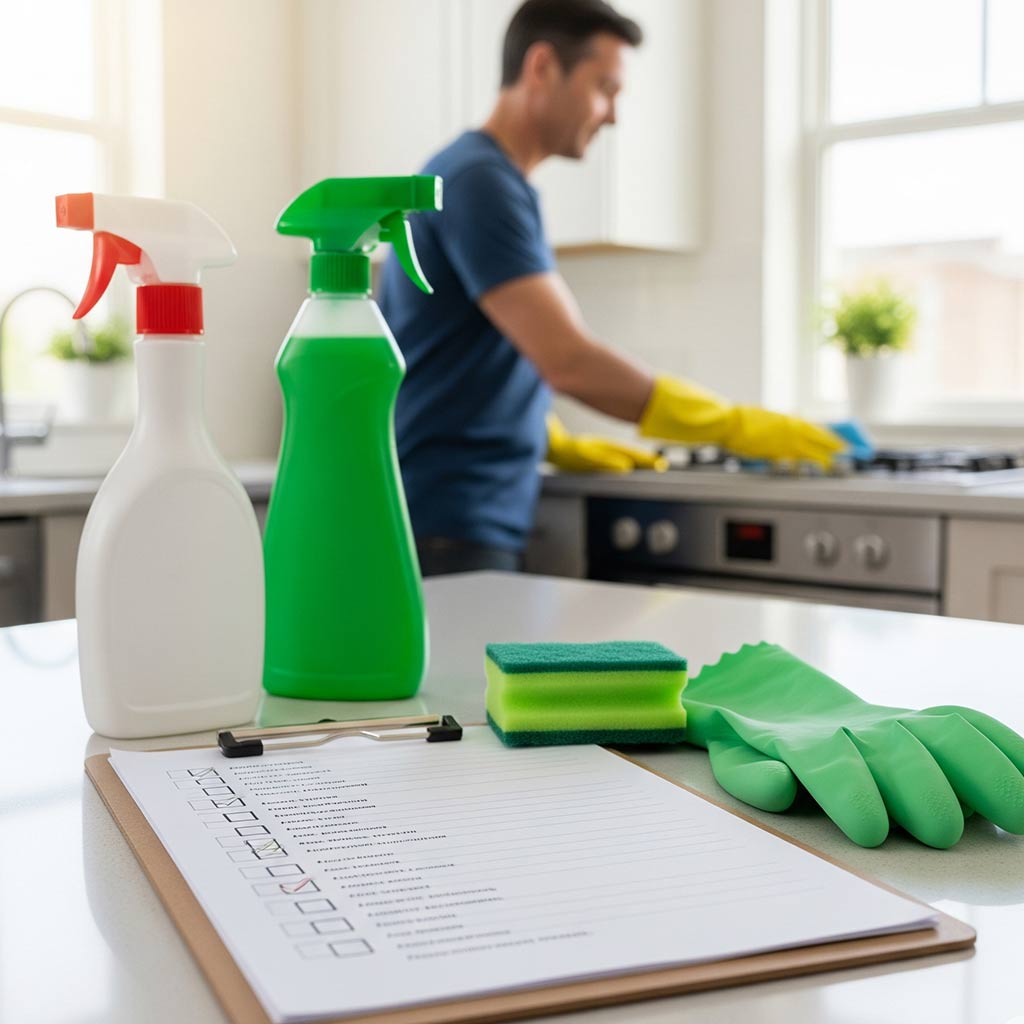
Landlords and property managers are typically very thorough, focusing on areas that accumulate the most wear and tear and grime. The most common areas they inspect include:
- Kitchen: Oven, stovetop, rangehood, sink, benchtops, inside and outside of cupboards.
- Bathroom: Toilet, shower, bath, sink, tiles, and grout.
- Windows: Glass (inside and out), tracks, and sills.
- Walls: Spot cleaning for marks and scuffs.
- Flooring: Vacuuming carpets, mopping hard floors.
- Appliances: Any appliances provided (e.g., dishwasher, microwave) should be spotless.
Ensuring these areas of domestic cleaning meet a high standard of cleanliness is fundamental for a full bond return and good bond cleaning tips.
Deep Cleaning Tips Room-by-Room
A surface clean won’t cut it. Each room requires a deep clean with attention to detail:
- Living Room & Bedrooms: Vacuum carpets thoroughly, clean blinds/curtains, wipe down skirting boards and light fixtures, spot clean walls, and clean inside wardrobes.
- Kitchen: Degrease the oven and rangehood, clean the stovetop thoroughly, wipe down all surfaces, including inside and outside of cupboards and drawers, and clean the sink and taps until sparkling.
- Bathroom: Scrub tiles and grout, disinfect the toilet bowl and seat, clean shower screens to remove soap scum, and polish mirrors and chrome fixtures.
Knowing how to bond clean effectively involves this level of detail.
Don’t Forget the Hidden Spots
These are the areas tenants often overlook, but agents consistently check:
- Skirting boards and architraves
- Cleaning window tracks and frames
- Light fixtures and fan blades (dusting and wiping)
- Inside and behind all appliances (oven trays, dishwasher filters, fridge if supplied)
- Power points and light switches (wiping off grime)
- Inside and outside of all cupboards, drawers, and pantry shelves
- Vents and exhaust fans
Addressing these hidden spots demonstrates a truly comprehensive clean, which is crucial for how to get your bond back.

Keep a Copy of the Condition Report
Your original Entry Condition Report is your best friend during the move-out process. Use it as a checklist to compare the property’s current condition with how it was when you moved in. After you’ve cleaned, take extensive, dated photographs or videos of every room, showcasing its clean state. This visual record is invaluable evidence in case of any disputes and reinforces your efforts on how to bond clean.
Repair the Normal Damages
One must distinguish between what is referred to as “fair wear and tear” and what is termed as damage. Fair wear and tear is the type of aggravation that develops as a result of everyday usage, e.g., a few marks on the walls, a pair of frayed curtains, or a frayed carpet as a consequence of the elevated traffic. This should be the role of the landlord.
A tenant, however, acts negligently, or even purposefully (big holes in the walls, major stains, broken fixtures, etc), which causes harm. Normal wear and tear is not a problem, but it is your responsibility to fix any damage that you or your visitors have caused, which is above and beyond what is considered to be normal wear and tear. The repairs specified below should be handled before the final inspection as a demonstration of action to keep the property.
Carpet and Pest Requirements
Many lease agreements, especially in areas like Tasmania, stipulate professional carpet cleaning and sometimes pest control as part of the end-of-tenancy requirements, particularly if you had pets. Even if not explicitly stated, professional move-out carpet cleaning is often recommended as standard domestic vacuuming rarely meets the required depth of cleanliness for a full bond claim in Tasmania. Check your lease carefully for these specific clauses.
How to Claim Your Bond Back: Step-by-Step
Once the cleaning is complete, the final step is to formally claim your bond. Here’s the process you’ll generally follow:
Final Checklist Before Submitting Your Bond Refund Request
Before initiating your bond refund request, ensure you’ve completed these critical steps to avoid any disputes and maximise your chances of a full how to get your bond back:
- Pay rent through the notice period: Ensure all rent is paid up to and including the day you vacate.
- Clean the property to its original condition: As per the detailed cleaning tips above.
- Repair any damage beyond wear and tear: Address any tenant-caused damages.
- Remove all personal belongings: Leave nothing behind.
- Sign the final condition report with the landlord/agent: If possible, do a walk-through together and agree on the property’s condition.
- Return all keys and access items: Including remotes, fobs, and mailbox keys.
Complete Your Final Clean and Repairs
As detailed in the previous section, ensure every cleaning area is meticulously addressed and any necessary repairs are completed before the final inspection to avoid deductions from your claim for refund of bond money.
Do a Final Inspection
Once the property is completely empty and clean, do one final, thorough walk-through using your original condition report and the photos you took upon moving in. Take new photos and videos after your cleaning to serve as evidence of the property’s excellent condition. This documentation is vital for how do you get your bond back and for your bond return.
Fill Out the Bond Claim Form
In Tasmania, rental bonds are managed by MyBond, part of Consumer, Building and Occupational Services (CBOS). You will need to access the MyBond online portal to complete the bond refund form. Ensure all information is accurate, including bank details for the refund. This form is officially your claim for a refund of bond money.
Get the Landlord or Agent to Sign
Ideally, both you and your landlord/agent should agree on the bond refund amount and sign the bond claim form. If both parties agree via MyBond, the process is usually expedited. Delays can occur if one party doesn’t sign or disputes the claim, impacting your rental bond claim and bond refund.
Submit the Form to the Bond Authority
Once the form is complete and signed by all parties (or initiated by one party if the other is unresponsive), submit it via the MyBond online portal. The Rental Deposit Authority (RDA) will then process the bond refund.
Wait for Your Refund
The time it takes to get your bond back can vary. If both parties agree on the bond refund amount, the RDA usually processes the refund within a few business days of receiving the correctly completed and signed form. Allow 3-5 days for bank processing once the payment is made. This answers the common question of how long it takes to get the bond back.
If There’s a Dispute
If the landlord disputes the refund amount or a portion of it, they must lodge a claim via MyBond, providing reasons and evidence. You will then receive a notification from MyBond. In case you do not agree to their suggestion, then you may challenge their claim online, and in this case, you will get a chance to present your evidence (e.g., your photos, condition report). The case can then be forwarded to the Residential Tenancy Commissioner in Tasmania to be conciliated or an official conclusion reached, depending on the evidence brought up by both sides. The Residential Tenancy Act Tasmania is the knowledge that goes a long way when resolving any bond claim issue.
DIY vs Professional End-of-Lease Cleaning

Doing the cleaning up yourself at the end of the lease may save you initial expenditure, though there are hazards to this exercise. What real estate agents expect in terms of cleanliness is usually more than tenants expect, and failing to leave out some critical details may result in the deduction of your bond. Professional cleaning companies such as Mads Cleaning have the resources, have the right equipment, have commercial-grade goods, and have the check files utilised by real estate providers. They also know how to bond clean to a standard, and this makes it a comprehensive job that is commonly overlooked in DIY attempts. This kind of expertise usually pays more than the initial cost by giving you back all your bonds and giving you peace of mind.
Common Mistakes That Lead to Bond Deductions
Beyond cleaning, several other common mistakes to avoid during end-of-lease cleaning that frequently lead to bond refund deductions:
- Overlooked cleaning areas: As detailed above, neglecting hidden spots or specific appliance cleaning.
- Not repairing small damages: Failing to address tenant-caused damage, however minor.
- Leaving personal belongings behind: Requiring the landlord to dispose of items.
- Not disconnecting utilities: This results in ongoing utility bills in your name.
- Unpaid rent or outstanding bills: These are direct deductions from the bond.
- Failure to comply with pet clauses: Such as mandatory pest control or carpet cleaning in Tasmania.
- Not returning all keys: Landlords may charge for re-keying.
- Ignoring the initial condition report: Not using it as a guide.
- Disputing a bond claim in Tasmania without sufficient evidence.
Understanding how to get your bond back means avoiding these pitfalls.
Benefits of Hiring Professionals Like Mads Cleaning for End-of-Lease Cleaning
Choosing Mads Cleaning offers significant advantages for securing your rental bond in Tasmania:
- Expert Knowledge: We know the exact standards and checklists (including REIQ-approved guidelines) real estate agents use for bond inspections.
- Bond Back Guarantee: Many professional cleaners, including Mads Cleaning, offer a guarantee, giving you confidence that if our clean doesn’t pass, we’ll return to fix it.
- Time-Saving: Moving is stressful; let professionals handle the extensive cleaning so you can focus on other aspects of your move.
- Proper Equipment & Products: We use industrial-grade equipment and eco-friendly, effective cleaning solutions for superior results on all surfaces.
- Stress-Free Process: Eliminate the worry of missed spots or failed inspections. We make how to get the bond back.
- Cost-Effective in the Long Run: Avoiding re-cleans, disputes, and bond deductions often makes professional cleaning a more economical choice.
These bond cleaning tips lead to a smooth exit.
Final Words
Getting your full bond back isn’t just about cleaning; it’s about preparation, diligence, and understanding your responsibilities as a tenant. By thoroughly cleaning all areas, documenting the property’s condition, and understanding the bond claim process, you significantly increase your chances of a smooth bond return. Remember, preventing issues is always easier and less costly than resolving them. Following these bond cleaning tips is key to a successful move.
Get Your Full Bond Back with Ease — Trust Mads Cleaning & Gardening for a Stress-Free End-of-Lease Clean!
Don’t leave your bond to chance! Secure your full bond refund with the help of Mads Cleaning & Gardening. Our experienced team uses professional techniques and adheres to strict real estate standards, ensuring your property is immaculate for the final inspection.
Contact Mads Cleaning today for a free quote, book online, or call us for expert advice on end-of-lease cleaning mistakes and securing your bond.
FAQ
How do you get your full bond back in Tasmania?
To get your full bond back in Tasmania, you must leave the property in the same condition as when you moved in, allowing for fair wear and tear. This involves thorough cleaning, repairing any tenant-caused damage, removing all belongings, and returning all keys. You then initiate a bond claim through MyBond, which the landlord/agent must agree to for a full refund.
How long does it take to get your bond back after moving out?
In Tasmania, if both the tenant and landlord/agent agree on the bond refund amount and submit the claim form via MyBond, the Rental Deposit Authority typically processes the refund within a few business days. Allow an additional 3-5 business days for the funds to appear in your bank account. Disputes can significantly lengthen this process.
What cleaning is required to get my bond back?
You are generally required to return the property in a condition similar to when you moved in, minus fair wear and tear. This means a thorough clean of all internal and external areas, including kitchens (ovens, stovetops), bathrooms (grout, shower screens), windows, floors, walls (spot cleaning), and any outdoor spaces. Refer to your entry condition report and lease agreement for specific requirements.
Is professional cleaning mandatory for a bond refund in Tasmania?
Professional cleaning is not always legally mandatory in Tasmania unless specifically stipulated in your lease agreement (e.g., for carpets if you have pets). However, due to the high standards expected by landlords and agents, hiring professional cleaners is often recommended to ensure the property meets the required cleanliness for a full bond refund.
What happens if the landlord disputes the bond refund?
If your landlord disputes the bond refund in Tasmania, they will lodge a claim with MyBond, providing reasons and evidence. You will be notified and can then dispute their claim through MyBond, submitting your evidence. The dispute may then be referred to the Residential Tenancy Commissioner for conciliation or a formal determination based on the evidence provided by both parties.
Can I claim my bond back before I return the keys?
No, you generally cannot claim your bond back before returning the keys and vacating the property. The bond refund process typically begins once the tenancy has officially ended, and the property is handed back to the landlord or agent.
What is included in a bond cleaning checklist?
A comprehensive bond cleaning checklist covers all areas of a property, including: deep cleaning of kitchens (oven, stovetop, rangehood, cupboards), bathrooms (toilets, showers, baths, tiles, grout), bedrooms and living areas (vacuuming, dusting, wall spot cleaning, window cleaning, skirting boards, light fixtures), and often includes outdoor areas (sweeping, cobweb removal). Professional bond cleaners often use checklists aligned with real estate industry standards to ensure thoroughness.